Evidence-Based Chiropractic Care

Research · Results · Reason

Your body was designed to heal. Chiropractic helps it do just that. Modern research continues to validate what chiropractors have understood for over a century, when the spine functions properly, the nervous system can do its job.

Schedule First Visit
Where the Research Is Strongest

Conditions with strong chiropractic evidence.

One of the strongest evidence areas in all of healthcare
Major clinical guidelines, including the American College of Physicians (Qaseem 2017), the Lancet 2018 series, and the WHO 2023 chronic low back pain guideline, recommend spinal manipulation as a first-line, non-drug option. Read about our low back pain care.
Conservative care that gets real results
The Bronfort 2012 randomized trial in the Annals of Internal Medicine found spinal manipulation outperformed medication for both acute and subacute neck pain, with benefits sustained at one year. Read about our neck pain care.
Headaches that start in the spine
The Haas 2018 dose-response trial found 18 visits of chiropractic care produced clinically meaningful headache reduction at 24 weeks, more than light massage alone. Read about our headache care.
Head-To-Head Trials

When chiropractic was tested directly against standard care.

These are randomized controlled trials, the highest tier of clinical evidence, that put chiropractic care side-by-side with medication, exercise, or usual medical management.

Bronfort 2012 · Neck Pain
Spinal manipulation outperformed medication
An NIH-funded trial published in the Annals of Internal Medicine randomized 272 adults with acute and subacute neck pain to chiropractic, medication, or home exercise. Spinal manipulation produced significantly better pain relief than medication, with benefits maintained at one-year follow-up.
Goertz 2018 · Active-Duty Military
Adding chiropractic to medical care doubled improvement
Published in JAMA Network Open, this multisite trial of 750 active-duty US service members with low back pain compared usual medical care alone to usual medical care plus chiropractic. The combined group had significantly less pain, better function, and less medication use.
Haas 2018 · Cervicogenic Headache
A dose-response curve for chiropractic
The Haas dose-response trial in Spine Journal randomized chronic cervicogenic headache patients to 0, 6, 12, or 18 chiropractic visits. The 18-visit group had the largest, most sustained headache-day reduction at 24 weeks, the kind of evidence that informs realistic care plans.
Haas 2014 · Chronic Low Back Pain
More visits, more lasting benefit
A companion dose-response trial for chronic low back pain in the Spine Journal showed that a course of 18 chiropractic visits produced larger improvements in pain and function than fewer visits, again with benefits maintained months after care ended.
Meade 1995 · Long-Term Follow-Up
Chiropractic patients still better at 3 years
A British Medical Journal randomized comparison of chiropractic versus hospital outpatient management for low back pain found chiropractic patients had greater improvement initially and were still doing better three years later, even though many had stopped care years earlier.
Rubinstein 2019 · BMJ Meta-Analysis
47 trials, consistent benefit
A BMJ systematic review of 47 randomized controlled trials covering nearly 9,200 patients with chronic low back pain concluded that spinal manipulative therapy produces similar effects to recommended therapies for short-term pain and function, and is well tolerated.
Setting the Record Straight

Common myths about chiropractic.

Myth
"Chiropractic is only opinion-based."
Fact
Chiropractic care has been studied in randomized trials, systematic reviews, clinical guidelines, and large healthcare utilization studies. The profession has a strong and growing research foundation.
Myth
"Once you start, you have to go forever."
Fact
Care is individualized. Some people want relief. Some choose corrective care. Many continue with wellness care, not because they have to, but because they understand the value of maintaining what they've built.
Myth
"Chiropractic causes strokes."
Fact
Large population-based research, including the landmark Cassidy study, found no evidence of excess vertebrobasilar stroke risk associated with chiropractic care compared with primary care visits. This myth has been thoroughly addressed by the science.
Myth
"It's only for back pain."
Fact
Chiropractic care is fundamentally about the spine and nervous system. Its impact extends far beyond a sore back, into headaches, posture, movement quality, and overall nervous system function.
Safety Profile

What the research shows about safety.

Chiropractic care has an excellent safety profile. Most patients tolerate care well, and the most common responses are mild, temporary soreness or stiffness. Serious adverse events are exceedingly rare.

$1–3K
Chiropractor
Typical annual malpractice premium, reflecting a consistently low-risk intervention
vs.
$7.5–200K+
Medical Physician
$7,500 avg for primary care · surgeons $30–50K · OB/GYN up to $226K

Insurance companies price risk based on actuarial data, not opinion. The significant difference in malpractice premiums tells you what the data actually shows about relative risk.

The Bigger Picture

Chiropractic and the nervous system.

Dr. Heidi Haavik (DC, PhD) and her team at the New Zealand College of Chiropractic have built one of the most active chiropractic neuroscience research programs in the world. Their work uses EEG, somatosensory evoked potentials, transcranial magnetic stimulation, and motor-evoked potentials to measure what actually changes in the brain after a chiropractic adjustment.

Cortical Changes (Haavik & Murphy 2007)
Published in Clinical Neurophysiology, this landmark study used somatosensory evoked potentials to show that a single session of cervical spine adjustment altered cortical somatosensory processing in patients with subclinical neck pain. The brain processes information from the body differently after the spine moves better.
Prefrontal Cortex (Lelic 2016)
Published in Neural Plasticity, this study found that chiropractic adjustments increased activity in the prefrontal cortex, the part of the brain responsible for executive function, decision making, and motor control. A finding that helps explain why patients often report feeling clearer, calmer, and more in control after care.
Strength & Motor Control
Multiple Haavik group studies (2016, 2018, 2021) have documented immediate increases in muscle strength and altered motor cortex output following adjustments. The relevance for athletes, older adults, and anyone working on balance and movement is real and measurable.
Sensorimotor Integration
A consistent finding across the Haavik program is that chiropractic adjustments improve how the brain integrates input from joints, muscles, and skin into accurate motor output. This is the proprioceptive system, and it is foundational to upper cervical care, balance, and posture.
Pain Processing
Recent research (Maissan 2018, Haavik 2024) suggests that spinal manipulation modulates the way the central nervous system processes pain signals, helping to interrupt chronic pain patterns at the brain level rather than only at the joint.
Clinical Meaning
Patients regularly experience meaningful shifts in comfort, posture, balance, headaches, sleep, energy, and overall function. The neuroscience is starting to explain what chiropractors and patients have witnessed for decades.
Evidence Across Life Stages

Research relevant to every member of the family.

Chiropractic research is not just for adults with bad backs. Studies span infants, expecting moms, school-age kids, athletes, and older adults. The technique adapts to the patient. The evidence supports it across the spectrum.

Safety and outcomes in children
A 2010 review by Alcantara, Ohm, and Kunz, published in Explore, examined nearly 1,000 pediatric chiropractic visits and found a strong safety profile with rare, mild adverse events. Miller 2009 (J Manipulative Physiol Ther) found chiropractic care helped infants with breastfeeding difficulties associated with cervical dysfunction. Care for children uses gentle, technique-modified adjustments specific to growing spines.
Care during pregnancy
Khorsan 2009 (J Manipulative Physiol Ther) reviewed the prenatal chiropractic literature and concluded chiropractic care is widely used in pregnancy with a strong safety record. Borggren 2007 reviewed the evidence on Webster Technique, the certified protocol used to address pelvic and sacral mechanics during pregnancy and a foundation of our prenatal care.
Older Adults
Lower adverse event rates than primary medical care
Whedon et al. 2025 analyzed Medicare data and found older adults treated for neck pain with chiropractic had lower rates of adverse events than those treated with primary medical care. The prescription drug group had the highest adverse event rate of any measured group. Schneider 2010 also documented an excellent safety profile for spinal manipulation in older adults.
Drug-Free Pain Care

Chiropractic-first care is associated with substantially less opioid use.

In an era when prescription pain medication is one of the leading drivers of long-term harm in the United States, the research on chiropractic as an opioid alternative has become some of the most clinically important work in spine care.

Kazis 2019 (BMJ Open) found that adults whose initial visit for low back pain was with a chiropractor had substantially lower rates of early and long-term opioid prescription compared with those who first visited a medical provider.

Whedon 2018 (J Altern Complement Med) examined New Hampshire Medicaid claims and found chiropractic users had 55% lower odds of receiving an opioid prescription than non-users.

Stevans 2020 (JAMA Network Open) reported that early initiation of physical therapy or chiropractic care for new low back pain was associated with significantly reduced opioid use over the following year.

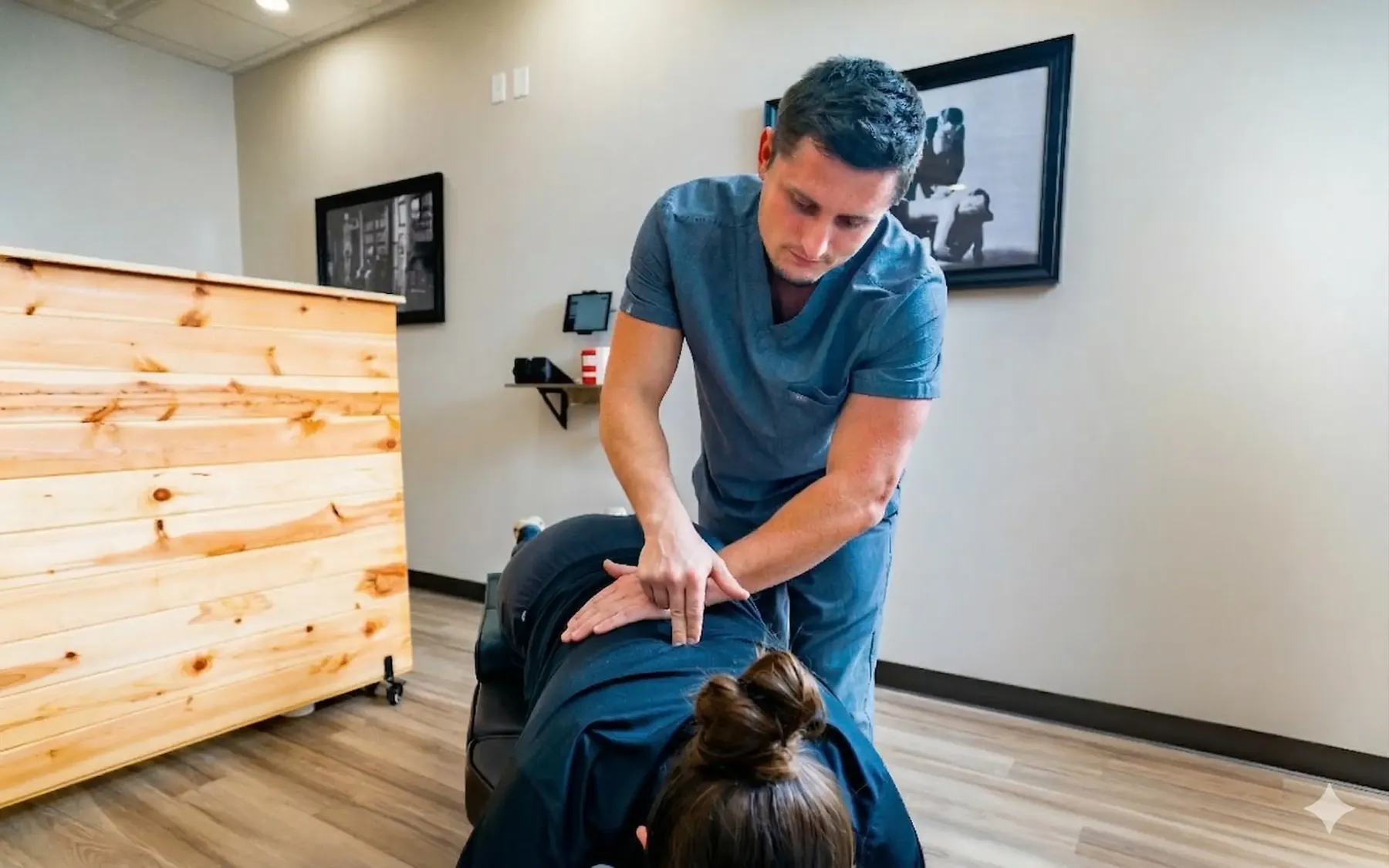
Dr. Palmer performing a hands-on chiropractic adjustment
Research Library

Peer-reviewed studies that inform our approach.

Organized by topic for quick reference. Citations link to the relevant care pages on this site.

Low Back Pain

01
Qaseem A et al. American College of Physicians Guideline for Low Back Pain. Ann Intern Med. 2017
Major clinical guideline recommending non-drug care first for many low back pain cases, including spinal manipulation as a first-line option.
02
Hartvigsen J, Buchbinder R, et al. The Lancet Low Back Pain Series, 2018 (3 papers)
Landmark three-part Lancet series calling for non-pharmacological first-line treatment, including spinal manipulation, and warning against overreliance on opioids, imaging, and surgery.
03
WHO Guideline for Non-Surgical Management of Chronic Primary Low Back Pain, 2023
Global guidance recommending person-centered, non-surgical care, including spinal manipulative therapy, for chronic low back pain.
04
Rubinstein SM et al. Benefits and harms of spinal manipulative therapy for chronic low back pain. BMJ. 2019
Systematic review and meta-analysis of 47 randomized trials and ~9,200 patients. Spinal manipulation produces effects similar to recommended therapies and is well tolerated.
05
Goertz CM et al. Effect of usual medical care plus chiropractic care on pain and disability among US service members. JAMA Netw Open. 2018
750-patient randomized trial. Adding chiropractic care to usual medical care produced significantly less pain and better function than medical care alone in active-duty military.
06
Haas M et al. Dose-response and efficacy of spinal manipulation for chronic low back pain. Spine J. 2014
Dose-response RCT. Patients receiving 18 chiropractic visits had larger and more lasting pain and function improvements than those receiving fewer.
07
Meade TW et al. Randomised comparison of chiropractic and hospital outpatient management for low back pain. BMJ. 1990, 1995
Classic RCT showing chiropractic patients had greater improvement than hospital outpatient management, with benefits sustained at 3-year follow-up.

Neck Pain

08
Bronfort G et al. Spinal manipulation, medication, or home exercise with advice for acute and subacute neck pain. Ann Intern Med. 2012
NIH-funded RCT of 272 patients. Spinal manipulation produced better outcomes than medication for acute and subacute neck pain, with benefits sustained at one-year follow-up.
09
Cassidy JD et al. Risk of vertebrobasilar stroke and chiropractic care. Spine. 2008
Population-based case-control and case-crossover study. No evidence of excess vertebrobasilar stroke risk associated with chiropractic care compared with primary medical care.
10
Whedon JM et al. Safety of chiropractic versus medical care among older adults with neck pain. JMPT. 2025
Medicare data analysis. Chiropractic management of neck pain in older adults had lower adverse event rates than primary medical care, with the prescription drug group carrying the highest risk.

Headaches and Migraines

11
Haas M et al. Dose-response and efficacy of spinal manipulation for chronic cervicogenic headache. Spine J. 2018
Dose-response RCT showing 18 chiropractic visits produced clinically meaningful, sustained reduction in headache days at 24 weeks compared with fewer visits or light massage.
12
Bryans R et al. Evidence-based guidelines for the chiropractic treatment of adults with headache. JMPT. 2011
Profession-wide clinical guideline summarizing the strongest evidence for chiropractic care of cervicogenic headache, migraine, and tension-type headache.
13
Chaibi A et al. Manual therapies for primary chronic headaches: a systematic review of randomized controlled trials. Eur J Neurol. 2014
Systematic review concluding that manual therapy, including spinal manipulation, has efficacy comparable to that of common first-line prophylactic medications for tension-type headache and migraine.

Neuroscience & Mechanisms

14
Haavik H, Murphy B. Cervical spine manipulation alters sensorimotor integration: a somatosensory evoked potential study. Clin Neurophysiol. 2007
Foundational study using somatosensory evoked potentials to demonstrate that a single session of cervical adjustment alters cortical processing in patients with subclinical neck pain.
15
Lelic D, Niazi IK, Holt K, et al. Manipulation of dysfunctional spinal joints affects sensorimotor integration in the prefrontal cortex. Neural Plast. 2016
EEG-source-localization study showing chiropractic adjustment increased prefrontal cortex activity, the brain region responsible for executive function and motor planning.
16
Niazi IK et al. Changes in H-reflex and V-waves following spinal manipulation. Exp Brain Res. 2015
Documented immediate increases in cortical drive to muscle following chiropractic adjustment, providing a mechanism for the often-reported boost in strength and motor control.
17
Haavik H et al. Impact of spinal manipulation on cortical drive to upper and lower limb muscles. Brain Sci. 2017
TMS study finding that adjusting the spine increased corticospinal excitability and motor cortex output, supporting clinical reports of improved athletic and functional performance.

Pediatric, Prenatal & Family

18
Alcantara J, Ohm J, Kunz D. The safety and effectiveness of pediatric chiropractic. Explore. 2010
Practice-based research network analysis of pediatric chiropractic care documenting a strong safety profile and high parent-reported satisfaction. Read about our pediatric care.
19
Miller JE, Miller L, Sulesund AK, Yevtushenko A. Contribution of chiropractic to resolving suboptimal breastfeeding. JMPT. 2009
Case series of nursing infants with breastfeeding difficulties associated with cervical dysfunction. Chiropractic care produced functional improvement in the majority.
20
Khorsan R, Hawk C, Lisi AJ, Kizhakkeveettil A. Manipulative therapy for pregnancy and related conditions: a systematic review. Obstet Gynecol Surv. 2009
Systematic review concluding that chiropractic care for pregnancy-related musculoskeletal complaints is widely used with a strong safety profile. Read about our prenatal care.
21
Borggren CL. Pregnancy and chiropractic: a narrative review of the literature. J Chiropr Med. 2007
Foundational review summarizing the evidence base for prenatal chiropractic care and the Webster Technique, a profession-recognized protocol used at our office during pregnancy.

Cost, Opioids, and Safety

22
Kazis LE et al. Observational retrospective study of the association of initial healthcare provider for new-onset low back pain with early and long-term opioid use. BMJ Open. 2019
Adults whose initial visit for new low back pain was with a chiropractor had substantially lower rates of early and long-term opioid prescription compared with those who first saw a medical provider.
23
Whedon JM et al. Association between utilization of chiropractic services and use of prescription opioid drugs. J Altern Complement Med. 2018
New Hampshire Medicaid claims analysis. Chiropractic users had 55% lower odds of receiving an opioid prescription than non-users.
24
Stevans JM et al. Risk factors associated with transition from acute to chronic low back pain. JAMA Netw Open. 2020
Early initiation of physical therapy or chiropractic care for new low back pain was associated with significantly reduced opioid use over the following year.
25
Farabaugh R et al. Cost of chiropractic versus medical management of adults with spine-related musculoskeletal pain: a systematic review. Chiropr Man Therap. 2024
Systematic review concluding chiropractic-first spine care is commonly associated with lower total costs and reduced use of higher-cost services.

This page is for educational purposes and is designed to help patients better understand the research behind chiropractic care. Citations are summarized for readability; full study details are available through PubMed and the original journals.

Browse Research By Topic

Find the evidence relevant to what brought you in.

Each of these care pages references the studies above, plus what we look for and how we approach that condition specifically.

Your health is worth more than managing symptoms.

Schedule your evaluation at Life Charge Chiropractic, thorough exam, full spinal imaging, and a clear plan designed to help you heal and function the way your body was designed to.

Schedule First Visit
Call (615) 219-9912Schedule First Visit