Hands-On. Specific. Evidence-Informed.

Chiropractic
Adjustments

A chiropractic adjustment is a specific, controlled force applied to a spinal joint, designed to restore movement, reduce nerve interference, and support the body's ability to function better. At Life Charge, adjustments follow a thorough exam. They are never guesswork.

Schedule First Visit Call (615) 219-9912
What It Is

Specific. Informed. Built around your exam findings.

A chiropractic adjustment, also called spinal manipulation, is the application of a precise, controlled force to a restricted or misaligned spinal joint. The goal is to restore normal movement, reduce joint restriction, decrease nerve irritation, and support the body's overall function.

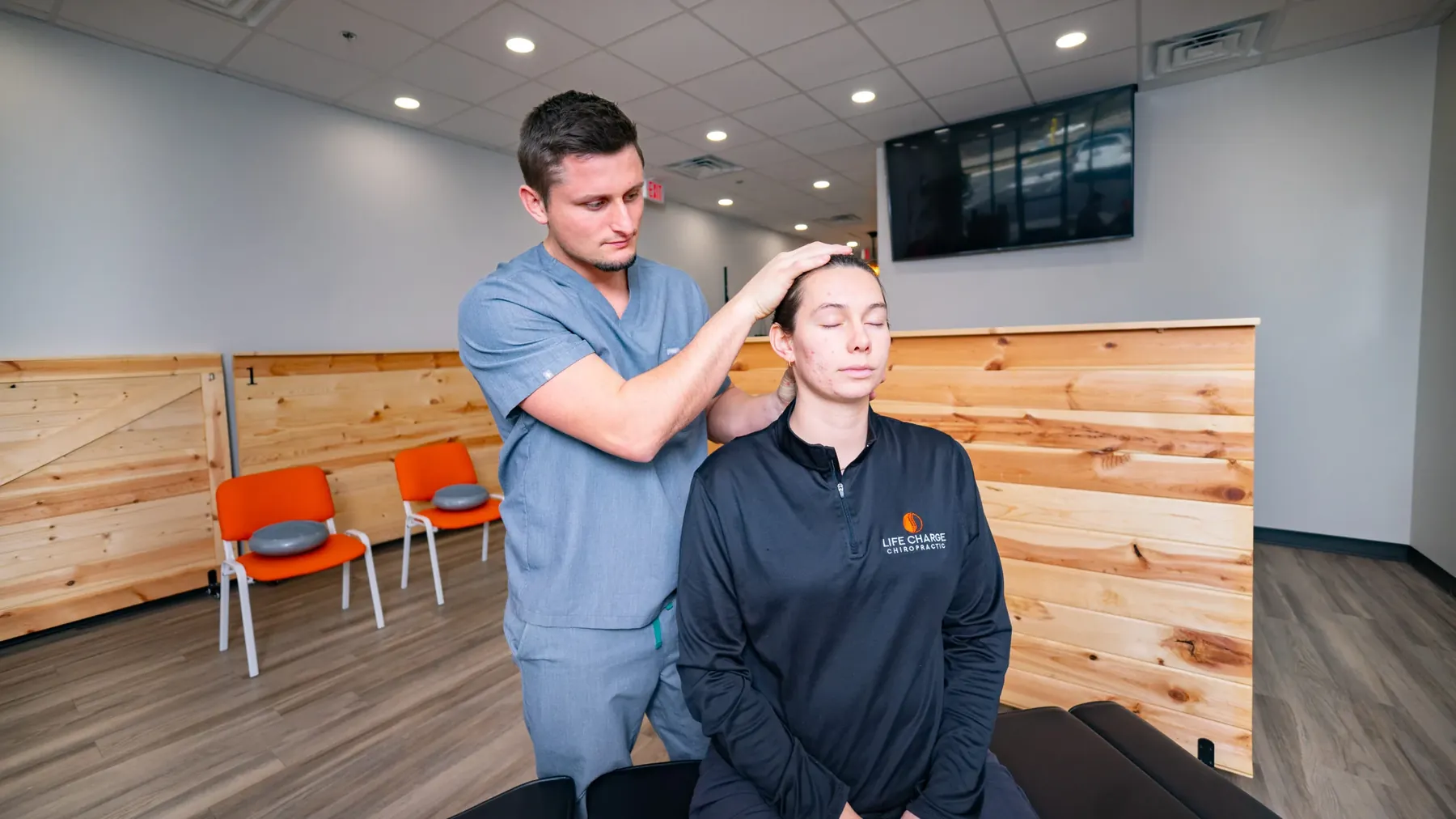
At Life Charge Chiropractic, adjustments are always preceded by a thorough exam. Dr. Palmer evaluates your spinal alignment, range of motion, neurological function, and posture before recommending which joints need to be addressed, how, and with what technique.

Not every patient receives the same adjustment. The technique, direction, force, and frequency are all specific to what your exam and imaging reveal, because your body is not the same as anyone else's.

Schedule First Visit

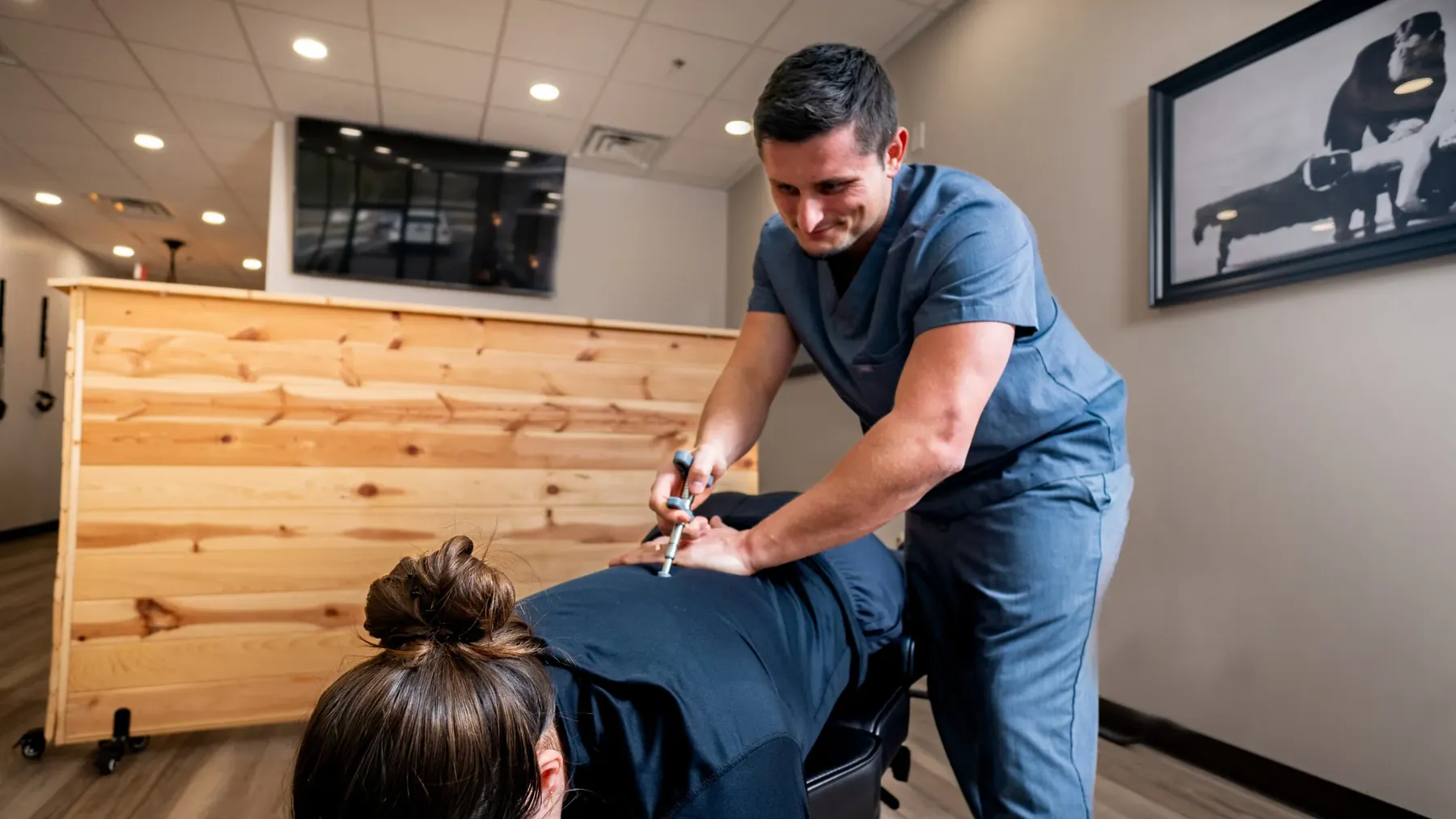
Dr. Palmer performing a specific chiropractic adjustment in Gallatin TN
Techniques Used at Life Charge

The approach fits the patient.

Manual Adjustment
The traditional hands-on spinal manipulation, a high-velocity, low-amplitude thrust applied to a specific joint to restore movement and reduce restriction.
Instrument-Assisted
A small, handheld instrument delivers a precise, gentle impulse to the target joint. Often used for patients who prefer a lower-force approach or need specific segmental targeting.
Upper Cervical Specific
Focused adjustment techniques for the atlas and axis at the top of the spine, where small misalignments can have wide-ranging effects on the nervous system.
Lumbar & Pelvic
Manual and table-assisted adjustments for the low back and pelvis, addressing disc-related, postural, and nerve-related patterns in the lumbar spine.
Pediatric Adjusting
Gentle, modified techniques appropriate for children and infants, using light fingertip pressure rather than the force used for adult patients.
Pregnancy-Modified
Adjusted positioning and reduced force for prenatal patients, supporting the low back and pelvis throughout pregnancy with safety and comfort in mind.
Before We Adjust

An adjustment without an exam is a guess.

Dr. Palmer does not begin adjusting on visit one. Every new patient receives a focused evaluation first, so that every adjustment that follows is based on something real, not just where the pain is.

1
Focused chiropractic exam
Posture, range of motion, joint mobility, neurological function, and orthopedic testing, to identify what needs to be addressed and why.
2
Digital X-rays when appropriate
Spinal alignment, disc spacing, and curvature all inform which joints need to be addressed and which technique is best for your structure.
3
Thermal imaging when appropriate
Nervous system stress patterns from thermal scans help us understand the functional picture beyond what X-rays show structurally.
4
A specific plan, then care begins
You know what Dr. Palmer found, what it means, and what he recommends before the first adjustment happens.
"The adjustment is not the first step, the exam is. Understanding what your spine is doing, why it matters, and how your nervous system is affected is what makes the adjustment specific instead of general."
Dr. Palmer Piana, Life Charge Chiropractic
Beneath the Surface

What we evaluate before we adjust.

A specific adjustment requires specific information. These are the things we examine before any force is delivered to your spine, so the technique, segment, and direction match what your body actually needs.
01Palpation

Static palpation findings

With you in a still position, we feel for tissue tone, tenderness, swelling, and bony landmark position. This tells us where the body has been holding stress, often long before the patient is aware of it.

02Motion

Motion palpation findings

Each spinal segment should move in specific, predictable ways. We move the joint through its range and feel where motion is restricted, excessive, or guarded. Restriction is what an adjustment is designed to address.

03Posture

Postural analysis

Standing posture from the front and side reveals how your structure is bearing weight, where compensations are showing up, and how the spine is loading the discs and joints over the course of every day.

04Pelvis

Leg-length differential

A functional difference in leg length, even a few millimeters, changes how the pelvis sits and how the lumbar spine loads. We measure this directly because it changes the side and direction of the adjustment we deliver.

05Imaging

Digital X-ray findings, when indicated

When the exam, history, or response to care points to it, we use on-site digital X-rays to confirm alignment, disc spacing, curvature, and any structural conditions that change how an adjustment should or should not be delivered.

06Neuro

Neurological screen

Reflexes, muscle strength, sensation, and balance testing tell us whether nerve roots, the spinal cord, or higher pathways are involved. This protects you, and it changes which segments are safe to address and how.

07History

Prior care response

How your body has responded to previous chiropractic care, physical therapy, or other treatment is real data. It informs the technique we choose, the force we use, and how we sequence the early visits.

08Technique

Technique selection rationale

Diversified, Activator, Blair upper cervical, Drop, and instrument-assisted techniques each fit different bodies and findings. We pick the technique that matches your structure and goals, then explain why before the first adjustment.

Dr. Palmer reviewing imaging with a patient before an adjustment
What an Adjustment Actually Is

An adjustment is not the same as a "crack."

A lot of people use the word "crack" when they describe what a chiropractor does. The audible sound, when it happens, is just gas releasing from inside a joint capsule, the same thing that happens when someone cracks a knuckle. The sound is not the goal, and it is not what makes the adjustment work. Plenty of effective adjustments make no sound at all.

A chiropractic adjustment is a precise, controlled force delivered into a specific spinal segment in a specific direction at a specific moment. The variables matter. Same patient, same complaint, two different segments, two different directions, two different outcomes. Specificity is what changes structure and changes how the nervous system responds.

This is also why volume of adjustments is less important than precision. A handful of well-targeted adjustments at the right segment will outperform dozens of general adjustments delivered to whatever moves. The body responds to information, not force, and a specific adjustment is more information than a general one.

The nervous system is the reason it works. The spine houses and protects the spinal cord. When a joint is restricted or misaligned, it changes the input the nervous system receives from that area. A specific adjustment restores normal motion, normal input, and gives the nervous system a chance to recalibrate the muscles, the reflexes, and the protective patterns built around the problem.

Common Questions

Chiropractic adjustment FAQ.

What exactly is a chiropractic adjustment?
A chiropractic adjustment is a precise, controlled force applied to a specific spinal joint to restore movement, reduce nerve irritation, and improve how the nervous system communicates with the rest of the body. At Life Charge, every adjustment follows a focused exam so the segment, direction, and technique are matched to what your body actually shows.
Does a chiropractic adjustment hurt?
For most patients, no. An adjustment is usually quick and often produces a sense of relief or release in the area. Some patients with acute irritation may feel mild soreness afterward, similar to the soreness that follows a workout, which typically resolves within a day. We adjust to your tolerance, not the other way around.
Will my adjustment pop or crack?
Sometimes, but the sound is not the goal. The popping noise is gas releasing from inside the joint capsule, the same thing that happens when someone cracks a knuckle. Many of the techniques we use, like Activator and Blair, produce no sound at all and are still highly specific and effective.
Are chiropractic adjustments safe?
Yes, when delivered by a licensed chiropractor after a thorough exam. The exam, neurological screen, and imaging when indicated are exactly what we use to rule out the conditions where an adjustment would not be appropriate. Once those are cleared, the technique is matched to your structure, age, and tolerance.
How often will I need to come in?
It depends on what the exam shows and what you are trying to accomplish. Acute issues often need a higher visit frequency early on, then taper as the structure responds. Long-standing patterns and corrective care take longer. Dr. Palmer will give you a clear, finite plan at the report of findings, not an open-ended schedule.
Can I be adjusted if I have arthritis or osteoporosis?
Often, yes, with the right technique. Arthritis and osteoporosis change the choices we make, not whether we can help. For these patients we typically use lower-force, instrument-assisted, or specific upper cervical techniques that do not rely on a high-velocity thrust. The exam and imaging tell us exactly what is safe and what is not.

Ready for care that is built around your spine?

Schedule your first visit at Life Charge Chiropractic in Gallatin, TN. Same-week new patient appointments available.

Schedule First Visit
Call (615) 219-9912Schedule First Visit