Gallatin & Hendersonville, TN

Degenerative Disc
Disease Care

Life Charge Chiropractic helps patients with degenerative disc changes in the neck or low back understand what the diagnosis actually means, and build a care plan around what is found on exam, not just the MRI.

Schedule First Visit Call (615) 219-9912
A Diagnosis That Sounds Worse Than It Is

Disc wear is common, and the right care changes the picture.

Degenerative disc disease is a label that gets handed out a lot, often after an MRI taken for back or neck pain. The name sounds frightening, but the underlying picture is usually a normal aging process that everyone experiences at different rates. The real question is not whether you have disc wear. The real question is whether the function around it is working for you or against you.

At Life Charge Chiropractic, we evaluate how your spine, discs, and nervous system are functioning together. We look at alignment, motion, posture, nerve involvement, and the structures around the worn disc, and when appropriate, use digital X-rays and thermal imaging to give us a clearer picture of what is going on beneath the surface.

The goal is not to chase the MRI. The goal is to find the root of the symptoms and address it specifically.

Schedule First Visit

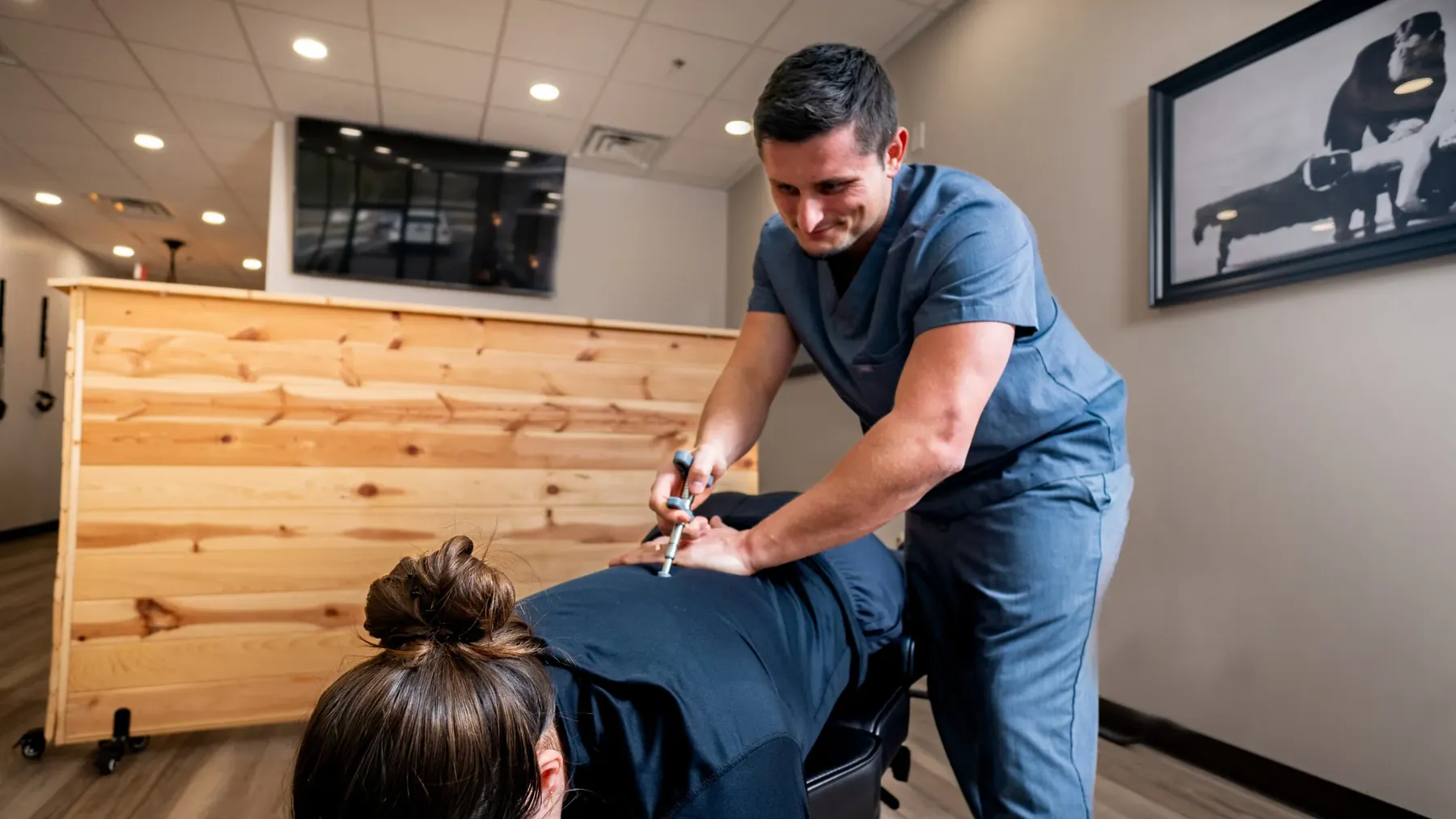
Dr. Palmer performing a lumbar adjustment
What Patients Describe

Common degenerative disc presentations.

Stiffness in the morning
Stiffness that takes 15 to 30 minutes to ease up after getting out of bed is one of the classic patterns of degenerative changes in the spine.
Pain that worsens with prolonged sitting
Worn discs handle sustained load less well than healthy ones. Long drives, desk work, or movie nights often produce a familiar ache.
Recurring flare-ups
Years of intermittent flare-ups, sometimes after small movements, are a common sign that the underlying disc and joint mechanics are not stable.
Pain that radiates into an arm or leg
Disc changes that narrow the space around a nerve root can produce numbness, tingling, or pain that travels into a limb. This needs careful evaluation.
A diagnosis from imaging without clear next steps
Many patients arrive holding an MRI report mentioning DDD, with no plan beyond pain medication. We help you understand what the imaging shows and what to do about it.
Movement feels limited
A general loss of range, especially in the neck or low back, often comes with disc and joint wear and responds well to specific care that restores motion.
Our Approach

Specific care based on what your spine actually shows.

Before recommending anything, we evaluate. A focused exam gives us the information needed to create care that fits your structure, your nervous system, and your goals.

1
Full health and symptom history
We document when the pain started, what triggers it, what helps, and any prior imaging or treatment, all relevant to finding the root cause.
2
Spinal and neurological evaluation
Orthopedic testing, range of motion, neurological screening, and a hands-on chiropractic exam to understand the mechanics at play.
3
Digital X-rays when clinically appropriate
Standing X-rays let us see disc spacing, alignment, and curvature, information that changes how care is delivered.
4
Specific care plan and report of findings
You will know exactly what Dr. Palmer found, what it means, and what the plan is, before any care begins.
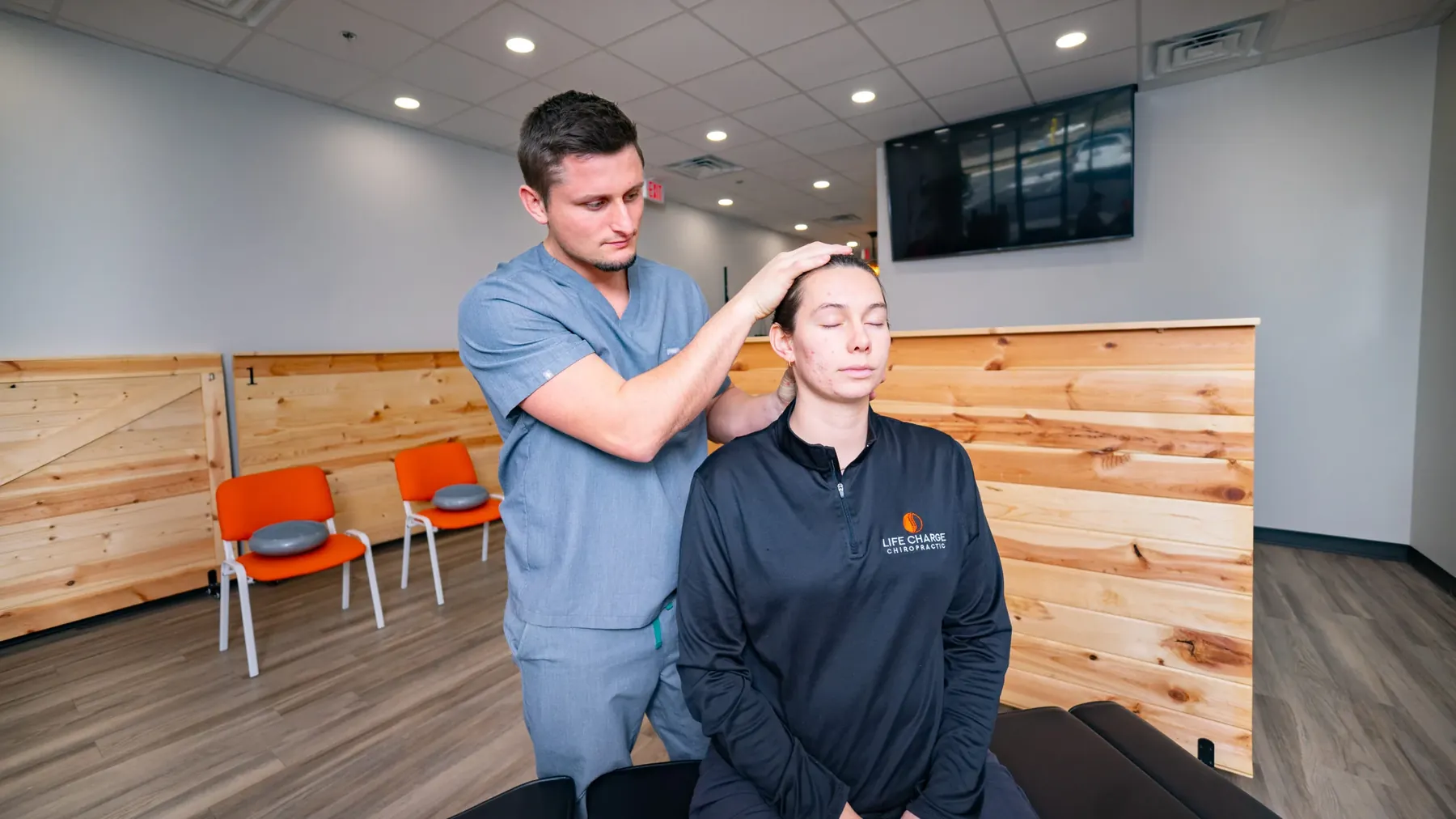
Dr. Palmer adjusting a patient
"Disc wear is part of life. How well your spine moves, adapts, and recovers around it is what actually matters."
Dr. Palmer Piana, Life Charge Chiropractic
Beyond the Standard Exam

What we look for in a degenerative disc exam.

Disc changes alone do not predict pain. Function does. These are the specific things we test for so the care plan addresses the structures that are actually driving your symptoms.

01Levels

Cervical and lumbar levels involved

Disc wear most commonly shows up at C5-C6, C6-C7, L4-L5, and L5-S1. Knowing exactly which levels are involved changes which adjustments and exercises will help most.

02Severity

Severity grading on imaging

We assess disc height loss, end plate changes, and signs of long-term wear. The grade matters less than the function around it, but it helps frame what is realistic.

03Alignment

Spinal alignment and curve

A flattened or reversed curve increases the load on already worn discs. Standing X-rays show the curve, and we track how it responds as care progresses.

04Posture

Postural compensation

Years of disc wear usually come with postural patterns the body has adopted to avoid pain. We map those patterns so care addresses them rather than reinforcing them.

05Motion

Mobility and stability balance

Some segments around a worn disc are too stiff. Others are too loose. Care matches the segment, restoring motion where it is missing and adding stability where it is needed.

06Joints

Surrounding joint involvement

When a disc thins, the small facet joints behind it carry more load. Pain that flares with extension or rotation is often coming from those joints, not the disc itself.

07Pattern

Mechanical versus radicular pain

Mechanical pain stays in the spine and changes with position. Radicular pain travels into a limb and follows a nerve pattern. Telling them apart is critical to choosing the right care.

08Comorbid

Coexisting arthritis and stenosis

Disc changes often travel with bone spurs, facet arthritis, and narrowing of the space around the spinal cord. Recognizing the full picture changes the plan and any referrals needed.

Dr. Palmer reviewing imaging with a patient
Reading Past The Diagnosis

A bad MRI does not always mean bad pain.

Degenerative disc disease is a misleading name. It is not a disease in the way most people use that word. It is a description of what discs look like as they wear over time, and almost everyone has some degree of it by middle age. Studies of people with no back pain at all routinely find disc bulges, height loss, and signs of wear on imaging.

What that means in practice is that the picture on the MRI is only part of the story. Two patients with similar imaging can have very different lives. One has constant pain and limited motion. The other moves freely and barely thinks about their back. The difference is rarely the disc itself. The difference is how the rest of the system is functioning around it.

Whole-system chiropractic care looks at the spine, the surrounding joints, the curve, the posture, and the nervous system as a connected system. When function improves, pain often improves with it, even when the disc on imaging looks the same. The right care can also slow further wear, because moving and loading the spine well is part of how it stays healthy. Use it or lose it applies to spines too.

When the exam tells us what is actually driving your symptoms, the care plan can be specific. Specific care holds longer, because it is changing the function around the disc, not just the disc itself.

Common Questions

Degenerative disc disease FAQ.

Is degenerative disc disease really a "disease"?
Not in the usual sense. The name is misleading. Disc degeneration is a normal aging process that almost everyone experiences to some degree, often without pain. The diagnosis on a report describes what the disc looks like, not how your spine is functioning. Function is what we focus on.
Can chiropractic reverse degenerative disc disease?
Worn discs do not regrow into healthy ones. What can change is the function around them. Better motion, better alignment, better posture, and better neurological function often translate to less pain and more capacity, even when the imaging looks the same. The right care also helps slow further wear over time.
Will I need surgery eventually?
Most patients with degenerative disc disease do not need surgery. Surgery is usually reserved for specific patterns, like progressive neurological loss or severe nerve compression that is not responding to conservative care. Careful chiropractic care often reduces the chance that surgery becomes necessary.
Should I exercise with degenerative disc disease?
In most cases, yes. The right movement is one of the best things for a worn disc, because it helps the joint stay nourished, mobile, and stable. The wrong movement can flare things up. Dr. Palmer will give you specific guidance based on what your exam shows, including which patterns to lean into and which to avoid.
Why does my MRI look bad but I feel fine?
This is more common than most people realize. Imaging finds many changes that have nothing to do with current pain. Your function, your daily movement, and your nervous system are doing the work that keeps you comfortable. Care that supports those systems is care that protects how you feel.
Can chiropractic help with the pain and stiffness?
Often, yes. When motion is restored to the segments around a worn disc and posture and curve are addressed, pain and stiffness usually improve. Dr. Palmer will give you a clear timeline at the report of findings, based on what the exam shows.

Ready to do something about disc-related pain?

Schedule a new patient exam at Life Charge Chiropractic in Gallatin, TN. Same-week appointments available.

Schedule First Visit
Call (615) 219-9912Schedule First Visit