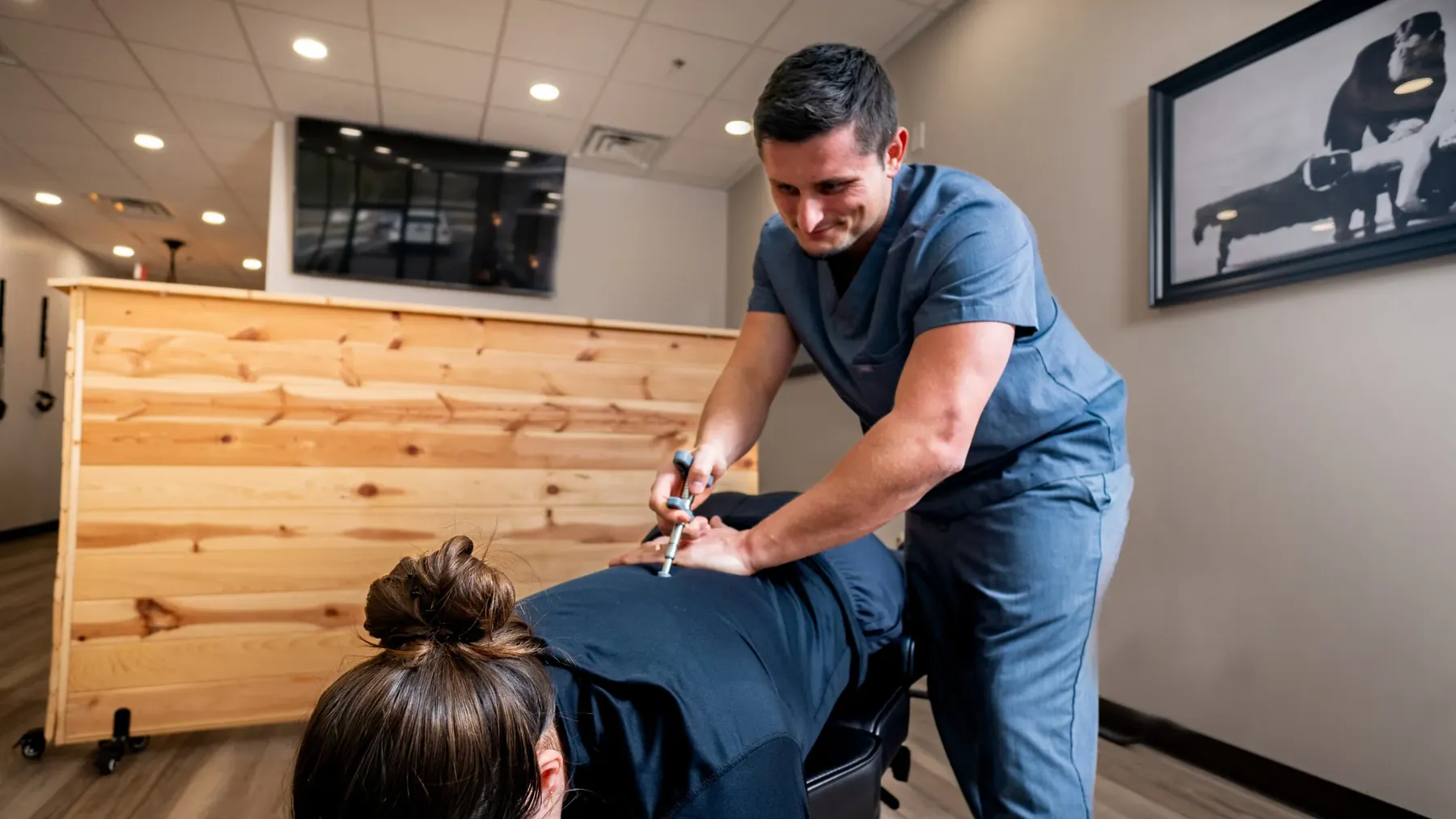
Life Charge Chiropractic helps patients with jaw clicking, locking, popping, and TMJ-related headaches understand what is actually driving the problem and build a care plan around what is found.
The temporomandibular joint sits inches from the upper cervical spine and shares nerve supply with it. When patients arrive with jaw pain, clicking, or locking, the picture is rarely just the jaw. The upper neck, posture, bite, and surrounding muscles are usually part of the same connected system, and they need to be evaluated together.
At Life Charge Chiropractic, we look at how the jaw, the upper cervical spine, the surrounding muscles, and the nervous system are functioning as a whole. We assess posture, joint motion, muscle tone, bite patterns, and nerve involvement, and when appropriate, we use digital X-rays and thermal imaging to give us a clearer picture of what is going on beneath the surface.
The goal is not just to quiet the jaw for a few days. The goal is to find the root of the problem and address it specifically.
Schedule First Visit
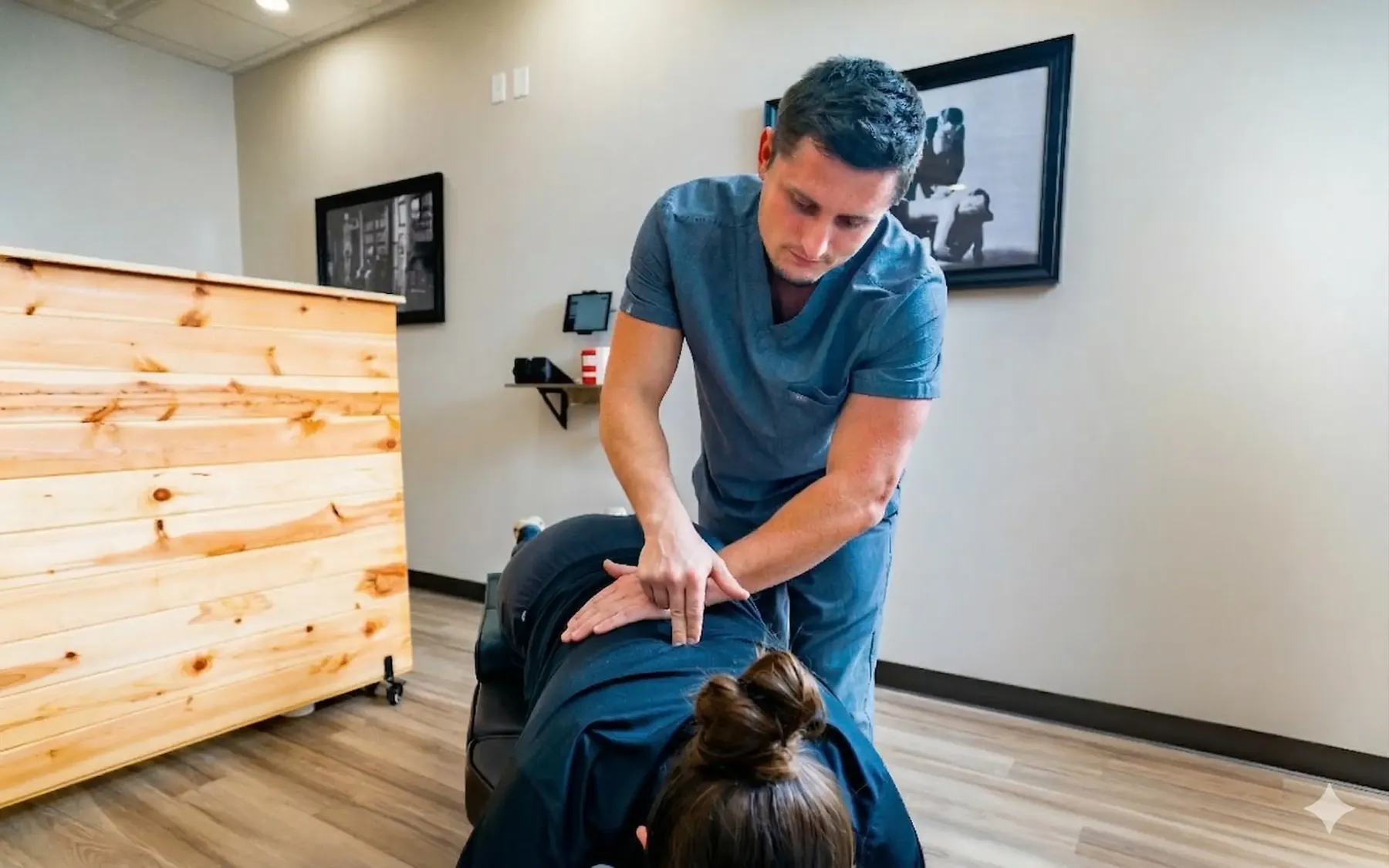

Before recommending anything, we evaluate. A focused TMJ exam, paired with an upper cervical assessment, gives us the information needed to create care that fits your structure and your nervous system.
"The jaw and the upper neck function as one connected system. You cannot fully address one without paying attention to the other."Dr. Palmer Piana, Life Charge Chiropractic
TMJ is a structural and neurological problem with several common drivers. These are the specific things we test for in a focused exam, so the care plan matches what is actually producing the symptoms.
Most patients who arrive with TMJ symptoms have already tried something. A night guard from the dentist. Soft foods. Stretching the jaw. Maybe a round of muscle relaxers. For some, things calm down for a stretch, and then a stressful week, a long stretch of screen time, or a poor night of sleep brings it all back.
A night guard protects the teeth, and that is important. It does not, however, change the joint mechanics, the upper cervical motion, or the muscle patterns that are loading the jaw in the first place. That is why so many patients with TMJ tell us their guard helps a little, but the underlying problem keeps returning.
The TMJ sits inches from the upper cervical spine and shares nerve supply with it. The jaw, the upper neck, the chewing muscles, the bite, and the posture form a connected system. When one piece is off, the others compensate. Until the structural and neurological pattern changes, the symptoms have a reason to return.
When the exam shows what is actually driving the TMJ pattern, the care plan can be specific. Specific care holds longer because it changes the thing that was wrong, not just the symptom on top of it.
Schedule a new patient exam at Life Charge Chiropractic in Gallatin, TN. Same-week appointments available.
Schedule First Visit