Gallatin & Hendersonville, TN

Scoliosis
Chiropractor

Life Charge Chiropractic helps families in Gallatin and Hendersonville understand their scoliosis, what the curve is actually doing, and what specific care can realistically accomplish at every stage.

Schedule First Visit Call (615) 219-9912
Structural, Not Muscular

Scoliosis is a structural curve, and the details matter.

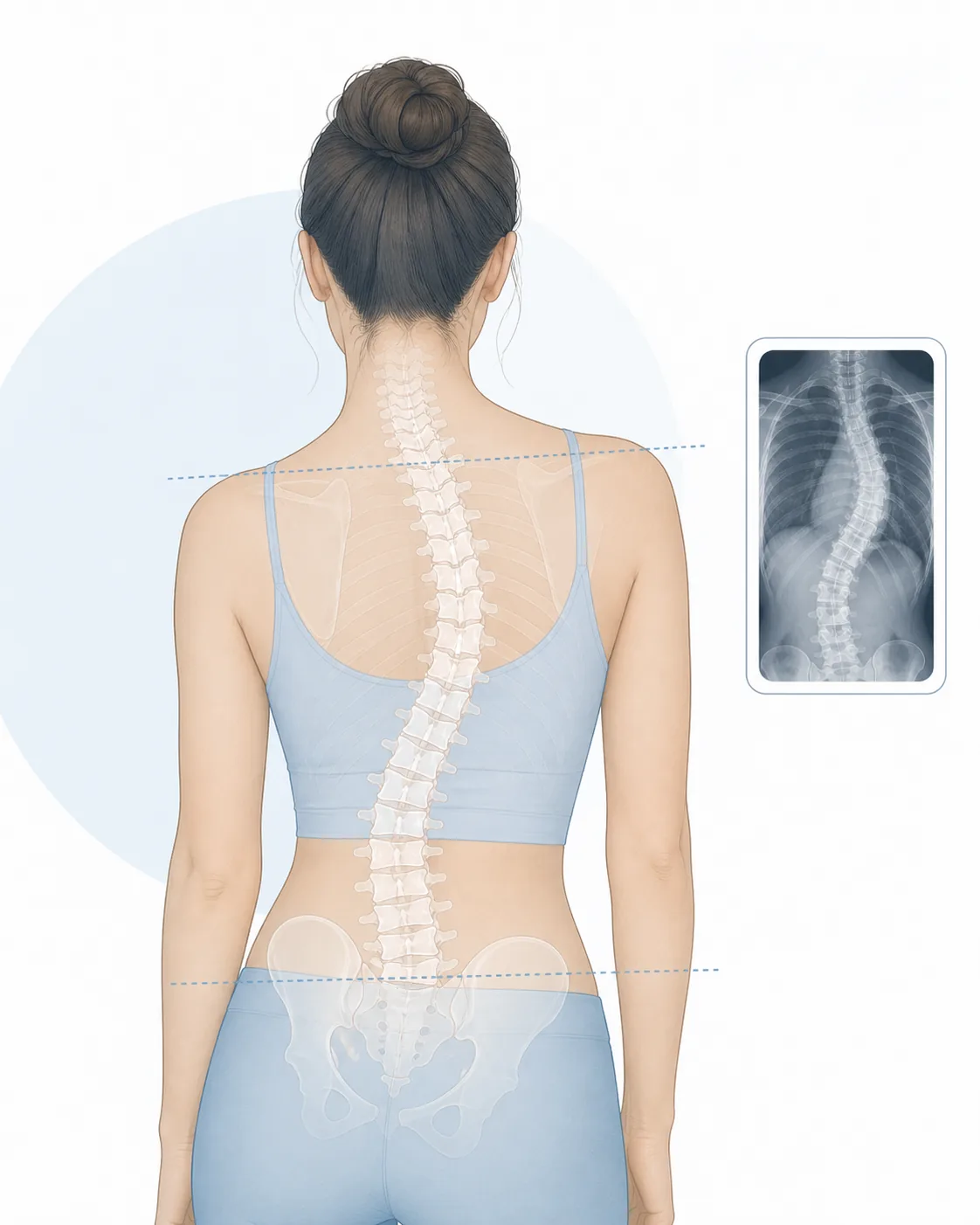
Scoliosis is a side-to-side curve of the spine combined with rotation. It is structural, not a muscle imbalance, and it does not respond to stretching alone. Two scoliosis patients can look similar on the outside and have very different curves, very different progression risk, and very different needs from care.

At Life Charge Chiropractic, we evaluate the curve magnitude, the curve location, the rotation pattern, and how the rest of the body has compensated. Standing X-rays let us measure the actual Cobb angle, not estimate it. That measurement, plus skeletal maturity and progression risk, shapes the conversation about what to do next.

Care goals for a scoliotic spine are different than for a straight spine, and that is a good thing. The plan is built around your specific curve, your age, and your goals, with clear coordination if bracing or other specialists become part of the picture.

Schedule First Visit
Standing X-ray imaging room used for scoliosis evaluation
What Patients Notice

Common scoliosis presentations.

Uneven shoulders
One shoulder sitting higher than the other is one of the most common visual signs of a thoracic curve, often noticed first in photos or in clothing fit.
A rib hump on forward bend
When a child or adult bends forward, one side of the rib cage rising higher than the other is a classic sign of the rotational component of scoliosis.
Uneven hips or waistline
A pelvis that sits higher on one side, or a waistline that looks asymmetric, often points to a lumbar curve or pelvic involvement that needs evaluation.
Clothing that does not hang right
Pant legs of different lengths, shirts that pull to one side, or bra straps that slide off one shoulder are everyday clues worth investigating.
Back ache or fatigue
Adult scoliosis often shows up as a deep, fatigue-type ache after standing or sitting for long periods, especially on one specific side of the spine.
School screening flagged something
Many families come in after a school screening turned up a possible curve. The next step is a real exam with actual measurement so you know what you are dealing with.
Our Approach

Specific care based on what the curve actually shows.

Scoliosis care is not one-size-fits-all. We start with a careful exam and standing X-rays so the plan is built on real measurements, not guesses.

1
Detailed history and screening
We document family history, age at first noticing the curve, growth status for kids, and any prior X-rays or bracing, all of which help predict what the curve is likely to do.
2
Postural and Adams forward bend exam
We check shoulder height, scapular position, rib hump, pelvic level, and leg length, and we use the Adams forward bend test to assess the rotational component.
3
Standing X-rays and Cobb angle measurement
A standing scoliosis film gives us the real number, the Cobb angle, plus curve location, rotation, and Risser sign for skeletal maturity in younger patients.
4
Specific care plan with realistic goals
You will know exactly what we found, what the curve numbers mean, and what care is targeting, whether that is curve management, posture, comfort, or referral when warranted.
Dr. Palmer reviewing scoliosis imaging with a patient
"Scoliosis care works best when the plan matches the actual curve, the age of the patient, and the goals that matter most to them. The specifics are everything."
Dr. Palmer Piana, Life Charge Chiropractic
Beyond the Standard Exam

What we look for in a scoliosis exam.

Scoliosis is a connected, whole-system problem. The numbers matter, and so do the patterns the body has built around the curve. These are the specifics that change what care should look like.

01Magnitude

Cobb angle measurement

The Cobb angle is the standard measurement for curve magnitude. Mild, moderate, and severe categories drive very different care decisions, and we measure it on standing X-ray rather than guessing.

02Location

Curve location and pattern

Thoracic curves, lumbar curves, thoracolumbar curves, and double major curves each behave differently. The location changes both the cosmetic concerns and the care strategy.

03Maturity

Age and skeletal maturity

A curve in a child who has not finished growing behaves very differently than the same curve in an adult. We use Risser sign and other markers to assess remaining growth and progression risk.

04Risk

Progression risk factors

Age, sex, curve magnitude, curve location, and family history all factor into how likely a curve is to progress. The plan changes based on the risk picture, not just the current number.

05Posture

Postural compensation patterns

The body builds patterns around a curve, including head shift, shoulder asymmetry, and hip drop. We document these so we can address what the curve is doing to daily posture and movement.

06Breathing

Rib cage and breathing capacity

Larger thoracic curves change how the rib cage moves. We screen breathing mechanics and chest expansion as part of the picture, especially for moderate to severe curves.

07Pelvis

Pelvic involvement

A tilted pelvis or functional leg length difference can drive or amplify a lumbar curve, often producing recurring low back pain. We measure pelvic position carefully because it changes how the rest of the spine sits.

08Test

Adams forward bend findings

The Adams forward bend test, often paired with a scoliometer, gives us a quick read on rotation. It is the same test most school screenings use, performed with measurement and follow-through.

Dr. Palmer reviewing scoliosis X-rays at the desk
A Clear Look at Scoliosis

What scoliosis care can do.

Scoliosis is a structural condition, and the right care meets the structure where it actually is. The plan looks different for a growing child with a mild curve than it does for an adult who has lived with their spine for decades. That is why the exam, the X-ray, and the measurements come first.

Mild scoliosis, generally a Cobb angle under 25 degrees, responds very well to specific chiropractic care, posture work, and movement training. Patients consistently see improvements in posture, function, and comfort, and in growing patients, progression risk can be actively managed.

Moderate curves, between 25 and 45 degrees in a growing child, often benefit from a coordinated approach where bracing enters the conversation. Bracing is the conservative standard at this stage, and we work alongside the right specialists so chiropractic care continues to support posture and function during that process. For larger curves we coordinate with the appropriate providers, and care continues to play a meaningful supporting role.

Adult scoliosis is a productive conversation. The focus shifts to how the spine moves, feels, and holds up day to day. Specific care makes a real difference in those things, and patients tell us so. The body adapts, and our job is to help it adapt well.
Common Questions

Scoliosis chiropractic FAQ.

Can chiropractic help scoliosis?
Yes, in clear and meaningful ways. Specific chiropractic care improves posture, function, and comfort, and for growing patients with mild curves it supports efforts to manage progression. Whether the curve number itself changes depends on the curve, the age, and the stage. We will give you a clear picture of what to expect at the report of findings.
At what age should we start care for a child with scoliosis?
As soon as the curve is identified. Early evaluation, including standing X-rays and a Cobb angle measurement, gives the clearest picture of where the curve is and how much growth remains. Earlier action means more options.
Will my child need a brace?
Bracing is generally considered for growing patients with curves in the 25 to 45 degree range. The exam, the Cobb angle, and the Risser sign for skeletal maturity all factor in. We will be direct about whether the picture points toward bracing and coordinate with a bracing provider when it does.
Does scoliosis always get worse?
No. Many curves stay stable, especially mild curves and curves in patients who have finished growing. Progression risk depends on age, curve magnitude, location, and family history. We measure those factors so the plan matches the actual risk.
Can I exercise normally with scoliosis?
In most cases, yes. Activity is generally good for the spine, and the right movement work can be a meaningful part of care. We give specific recommendations based on the curve and the activity, rather than blanket restrictions.
What is a Cobb angle?
A Cobb angle is the standard measurement of scoliosis curve magnitude. It is measured on a standing X-ray by drawing lines along the most tilted vertebrae at the top and bottom of the curve, and measuring the angle between them. It is the number that drives most scoliosis decisions.

Get a clear picture of your scoliosis curve.

Schedule a new patient exam at Life Charge Chiropractic in Gallatin, TN. Same-week appointments available.

Schedule First Visit
Call (615) 219-9912Schedule First Visit