Gallatin & Hendersonville, TN

Headache & Migraine
Chiropractor

Many recurring headaches begin in the neck. We evaluate the connection between cervical spine function, nervous system stress, and headache patterns, so care can be specific, not just symptomatic.

Schedule First Visit Call (615) 219-9912
The Cervical Connection

Headaches often start in the neck, not the head.

Headaches can be influenced by posture, neck tension, spinal stress, screen habits, and nervous system irritation. We start by evaluating the whole picture so we can better understand what may be contributing to the problem.

Even migraines often have a cervical component. Research continues to support the relationship between neck posture, upper cervical nerve irritation, and migraine frequency. Addressing the spine does not always eliminate migraines, but for many patients, it meaningfully reduces their frequency and severity.

At Life Charge Chiropractic, we evaluate the cervical spine, posture, and nervous system function to understand whether the neck is contributing to your headache pattern, and how specific chiropractic care may help.

Schedule First Visit
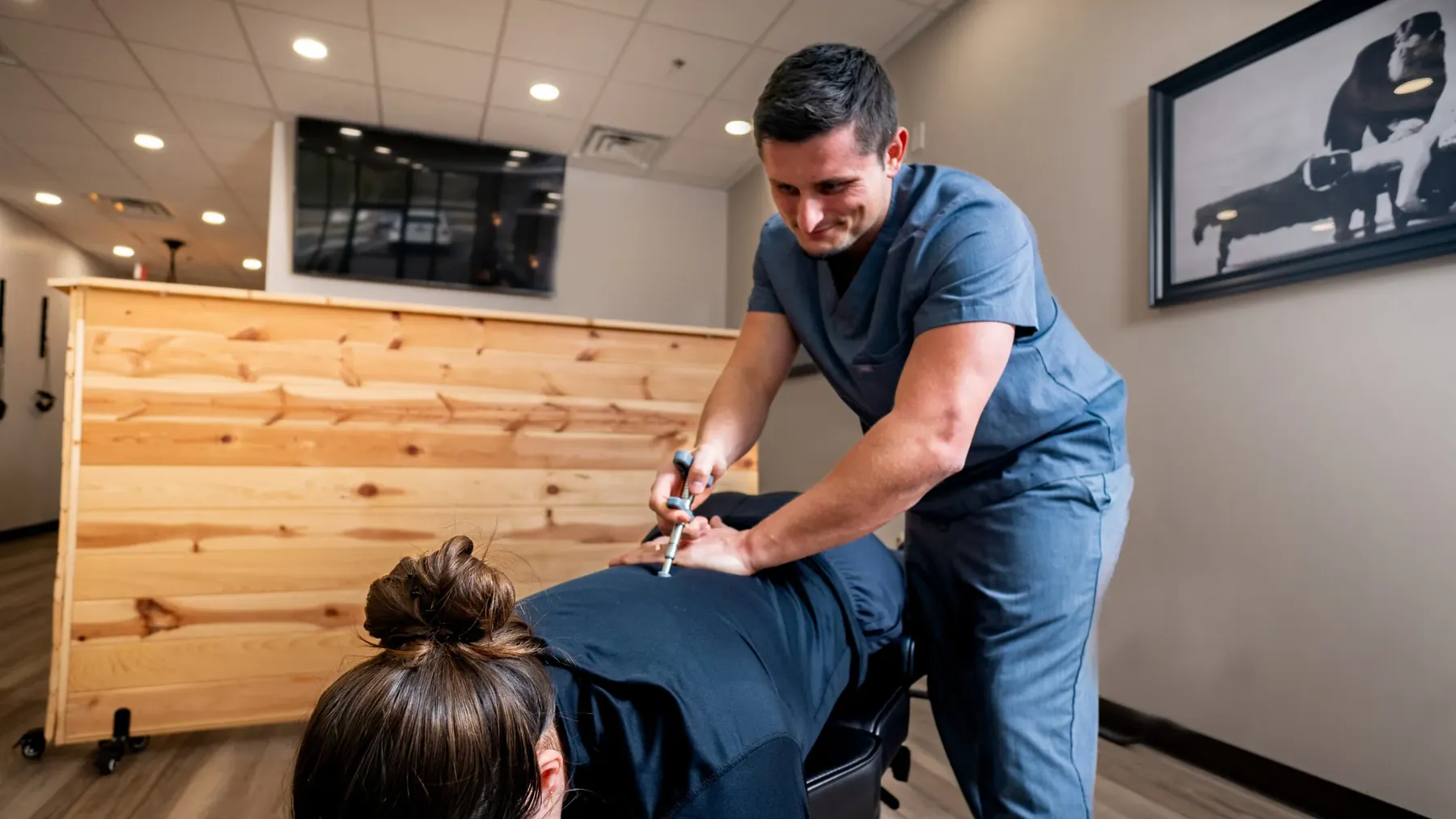

Dr. Palmer performing a cervical spine assessment for headache evaluation
What Patients Describe

Common headache patterns worth evaluating.

Headaches at the base of the skull
Pain that starts at the back of the head and radiates forward is often cervicogenic, originating in the upper cervical joints and suboccipital muscles.
Tension across the forehead or temples
A band-like pressure or tightening headache, often linked to cervical muscle tension and forward head posture patterns.
Headaches after screen time
Headaches that develop or worsen during desk work, driving, or phone use often reflect postural strain on the upper cervical spine.
Migraines with neck stiffness
Neck tension or stiffness that accompanies or precedes migraines may indicate cervical involvement worth evaluating separately from medication management.
Headaches that come with eye or jaw tension
Referred pain patterns from the upper cervical spine can involve the jaw, eye region, and sinuses, not just the typical headache zones.
Recurring headaches with no clear cause
When headaches keep returning without a clear explanation, the cervical spine and nervous system are worth evaluating as a potential contributing factor.
Our Approach

A focused cervical evaluation before any recommendations.

We do not assume every headache has a cervical cause. But we do evaluate it carefully, because when the neck is contributing, addressing it specifically can make a meaningful difference.

1
Detailed headache history
Frequency, duration, location, triggers, what makes them better or worse, and any current treatments. Context matters for finding the pattern.
2
Upper cervical and postural exam
We evaluate head position, cervical range of motion, joint mobility, suboccipital muscle tension, and neurological function in the upper cervical region.
3
Cervical X-rays when appropriate
Lateral and AP cervical X-rays show the curvature of the neck, joint spacing, and spinal alignment, all relevant to understanding cervicogenic headache patterns.
4
Clear explanation of findings
Dr. Palmer explains what the exam reveals, how it connects to your headache pattern, and what specific care, if appropriate, is recommended.
Dr. Palmer performing a cervical chiropractic adjustment
"Headaches matter, but headaches do not always start where they hurt. The upper cervical spine is one of the most overlooked structures in recurring headache patterns, and one of the most responsive to specific chiropractic care."
Dr. Palmer Piana, Life Charge Chiropractic
Beyond the Standard Exam

What we look for in a headache exam.

Most recurring headaches are a structural and neurological problem, not just a bad day. These are the specific things we test for in a focused chiropractic exam, so the care plan matches what is actually driving your headaches.

01Spine

Upper cervical alignment (C1 and C2)

The top two vertebrae sit directly under the brainstem and refer pain into the head more often than any other region. We test motion, position, and tenderness at C1 and C2 specifically, because they are central to most headache patterns.

02Curve

Cervical curve and posture

A healthy neck has a forward curve of about 40 degrees. When that curve flattens or reverses, the suboccipital muscles work overtime and headaches follow. We measure the curve on standing X-ray and track changes as care progresses.

03Posture

Forward head posture

Every inch the head sits forward of the shoulders adds roughly ten pounds of load to the cervical spine. We measure head position against the shoulders and trace how that load is showing up in your symptom pattern.

04Nerve

Occipital nerve irritation

The greater and lesser occipital nerves travel from the upper cervical spine into the back and sides of the head. When they are compressed or irritated, pain can present as a stabbing, burning, or band-like headache. We palpate the nerve path directly to identify the involvement.

05Jaw

Jaw and TMJ involvement

The jaw and the upper cervical spine share nerve pathways and influence each other. Clenching, grinding, or TMJ dysfunction can drive headache patterns or be driven by them. We screen jaw motion, symmetry, and tenderness as part of the exam.

06Vestibular

Vestibular and balance screening

Dizziness, lightheadedness, or visual aura with headaches can point to vestibular involvement that ties back to the upper cervical spine. We run a focused screen to understand whether balance pathways are part of your picture.

07Eye Strain

Eye strain and screen patterns

Headaches that build during screen work, reading, or driving often involve a combination of eye fatigue and upper cervical loading. We document the pattern and rule out the things that need an eye exam rather than spinal care.

08Pattern

Trigger and pattern documentation

When the headaches happen, where they start, what makes them worse, and what helps. The pattern often tells us as much as the exam. We document it carefully so the care plan can target the actual driver.

Dr. Palmer reviewing cervical imaging with a patient
Why Headaches Keep Returning

Most headaches are not a head problem. They are a neck problem.

Most people with recurring headaches have already tried the obvious things. Hydration. Caffeine. A dark room. Over-the-counter medication, then prescription medication. For some, the headache quiets down for a few hours, then it comes back the next time they sit too long, sleep wrong, or push through a stressful week.

That pattern is the body's way of telling you the underlying mechanics have not changed. Medication can quiet the symptom while it is in the bloodstream, but the joint, nerve, or posture pattern beneath it is still loaded. Until that load changes, the headache has a reason to return.

There are three common headache types we see clinically: cervicogenic headaches, which originate in the upper cervical spine and refer into the head; tension-type headaches, which involve cervical and suboccipital muscle tension; and migraines, which are neurological events that often have a cervical contributor. The categories overlap. Many patients have a mix.

Whole-system chiropractic care looks at the cervical spine, the posture above it, and the nervous system as a connected system, because they are. A small loss of curve at the top of the neck changes how the suboccipital muscles work, which changes how the occipital nerves are loaded, which changes how often headaches show up. When the exam tells us what is actually driving the pattern, the care plan can be specific. Specific care holds longer, because it is changing the structure beneath the symptom.

Common Questions

Headache and migraine chiropractic FAQ.

How is a chiropractic exam for headaches different?
A focused chiropractic headache exam looks at the structure and function of the upper cervical spine, the cervical curve, posture, and the nerves that refer into the head. We test motion at C1 and C2 specifically, screen the occipital nerve path, and document head position against the shoulders. The goal is to understand whether the neck is driving your headaches before any care is recommended.
Can chiropractic help with migraines?
For many patients, yes. Migraines are neurological events, but a cervical contributor is common, and addressing the upper cervical spine often reduces frequency and severity. We do not promise a cure, and we coordinate with your other providers when medication or imaging is part of the picture. The exam tells us whether you are likely to be one of the patients who responds well.
How long until headaches improve with chiropractic care?
Most patients notice some change in the first one to three visits. Lasting change usually takes longer, because we are not just calming the symptom, we are working to correct the structural and neurological pattern that produced it. Dr. Palmer will give you a clear timeline at the report of findings, based on what the exam shows.
Will I be adjusted at the first visit if I have headaches?
Sometimes, depending on what the exam shows. Some patients are ready for a first adjustment that day. Others need a focused exam, cervical imaging, and a report of findings before any care begins, so the first adjustment lines up with what we actually found. The neck is a careful region, and we move at the pace the exam supports.
What kinds of headaches respond best to chiropractic?
Cervicogenic headaches, tension-type headaches, and migraines with a cervical contributor tend to respond well. Headaches that are tied to posture, screen time, neck stiffness, or pain at the base of the skull are especially good candidates. The exam tells us what category your pattern fits and what to expect from care.
Can chiropractic help post-concussion headaches?
Often, yes. A concussion almost always involves the upper cervical spine, because the same forces that affect the brain also load the neck. Post-concussion headaches frequently have a cervical and vestibular component that responds to careful, specific care. We coordinate with your other providers when the case calls for it.

Tired of headaches that keep coming back?

Schedule a new patient exam at Life Charge Chiropractic in Gallatin, TN. Same-week appointments available.

Schedule First Visit
Call (615) 219-9912Schedule First Visit