Gallatin & Hendersonville, TN

Low Back Pain
Chiropractor

Life Charge Chiropractic helps patients in Gallatin and Hendersonville understand what is driving low back pain, stiffness, and recurring flare-ups, and build a care plan around what is actually found.

Schedule First Visit Call (615) 219-9912
Why It Keeps Coming Back

Low back pain is rarely just a muscle problem.

Low back pain can come from many sources, including spinal stress, pelvic imbalance, disc irritation, posture, muscle tension, or movement patterns. Our goal is to look beyond the symptom and understand how your structure and nervous system are functioning together.

At Life Charge Chiropractic, we evaluate how your lumbar spine, pelvis, and nervous system are functioning together. We look at posture, spinal alignment, disc health, movement patterns, and nerve involvement, and when appropriate, use digital X-rays and thermal imaging to give us a clearer picture of what is actually going on.

Our goal is not just to help you feel better for a few days. It is to find the root of the problem and address it specifically.

Schedule First Visit

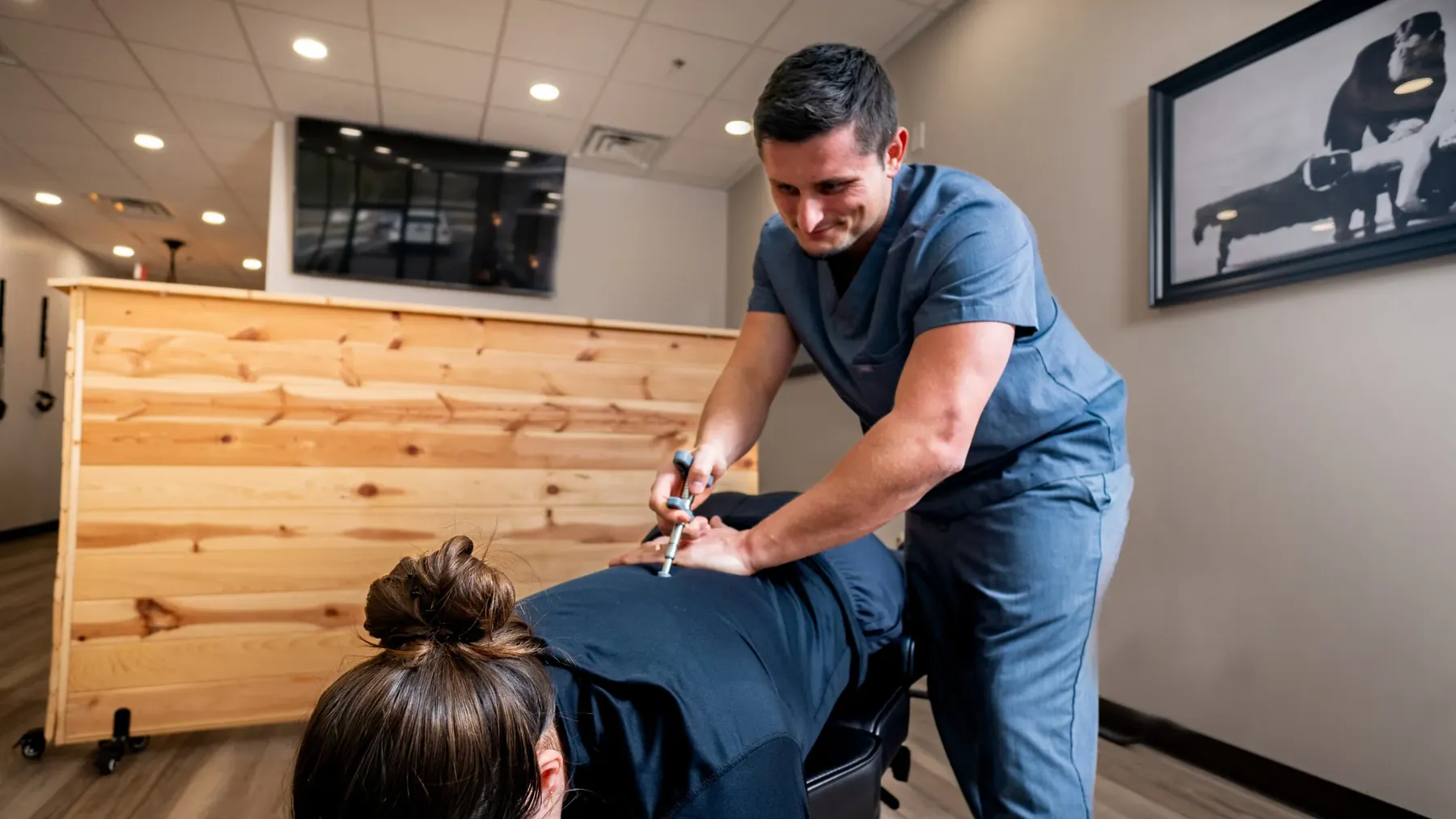
Dr. Palmer performing lumbar adjustment
What Patients Describe

Common low back pain presentations.

Pain getting out of bed
Morning stiffness and pain that makes the first steps of the day difficult is a common pattern worth evaluating structurally.
Flare-ups with activity
Low back pain that flares with lifting, bending, or yard work suggests a mechanical issue that benefits from a specific structural exam.
Sitting or driving aggravates it
Prolonged sitting that increases low back discomfort is often related to lumbar disc and joint loading that can be evaluated and addressed.
Pain that travels into the leg
Low back pain with leg symptoms, like sciatica, may indicate nerve involvement and needs a careful neurological and spinal evaluation.
Recurring flare-ups
Low back pain that improves temporarily but keeps returning is a signal that the underlying cause has not been found or corrected.
Dull, constant ache
A persistent background ache in the low back, even without a clear injury, is worth evaluating. It is often related to spinal alignment and nervous system stress patterns.
Our Approach

Specific care based on what your body actually shows.

Before recommending anything, we evaluate. A focused exam gives us the information needed to create care that is specific to your structure, your nervous system, and your goals.

1
Full health and symptom history
We document when the pain started, what triggers it, what helps, and what you have already tried, all relevant to finding the root cause.
2
Lumbar and pelvic evaluation
Orthopedic testing, range of motion, neurological screening, and a hands-on chiropractic exam to understand the mechanics at play.
3
Digital X-rays when clinically appropriate
Lumbar and pelvic X-rays allow us to evaluate alignment, disc spacing, and spinal curvature, information that changes how care is delivered.
4
Specific care plan and report of findings
You will know exactly what Dr. Palmer found, what it means, and what the plan is, before any care begins.
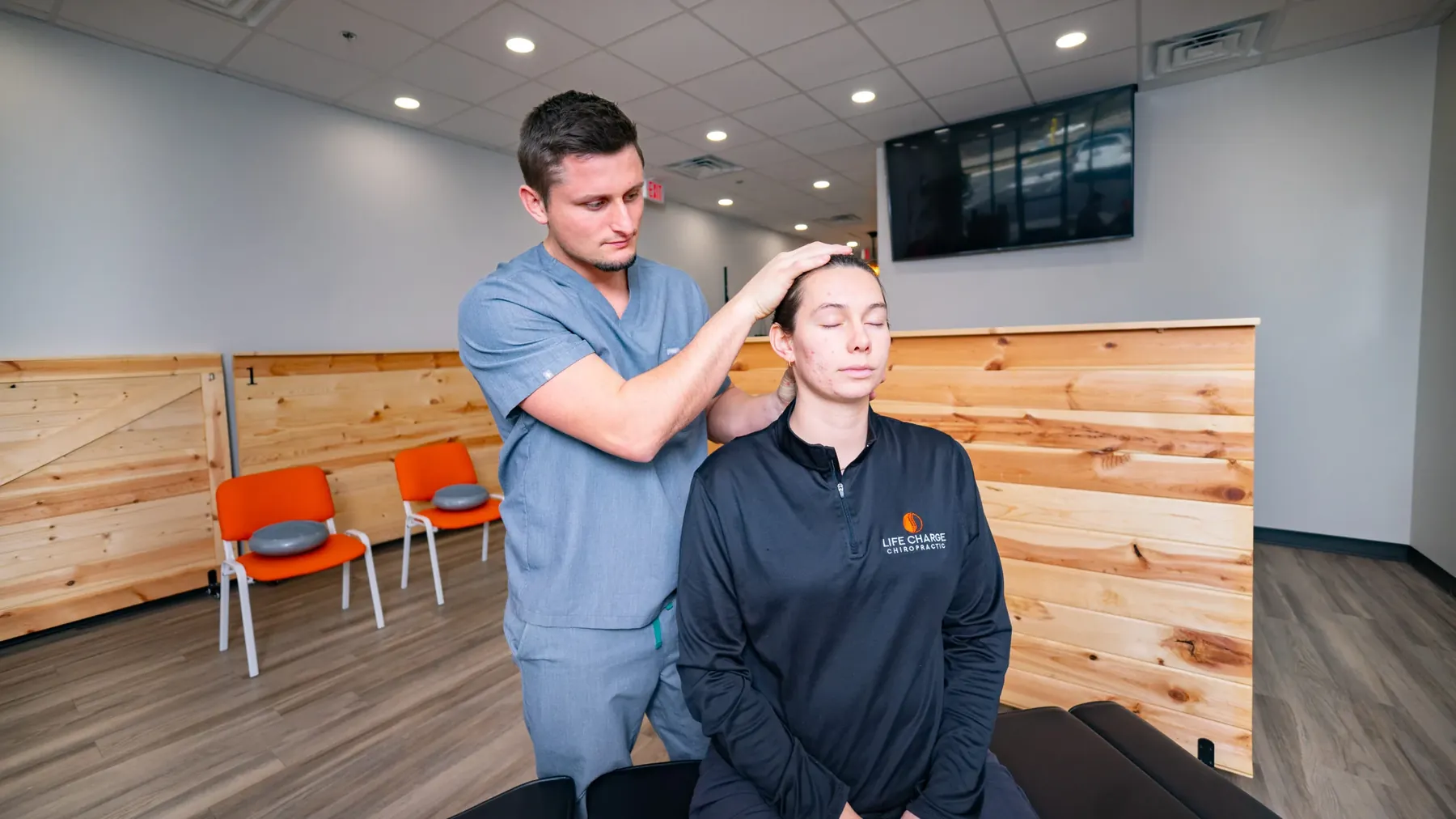
Dr. Palmer adjusting a patient
"The goal is not just to help you feel better for a few hours. The goal is to help your body move, adapt, recover, and function better over time."
Dr. Palmer Piana, Life Charge Chiropractic
Beyond the Standard Exam

What we look for in a low back exam.

Most low back pain is a structural and neurological problem, not just a tight muscle. These are the specific things we test for in a focused chiropractic exam, so the care plan matches what is actually driving your pain.

01Spine

Lumbar disc loading

Pain that worsens with sitting, bending forward, or coughing often points to disc involvement at L4-L5 or L5-S1. We test how each disc responds to load and motion before recommending care.

02Pelvis

Pelvic alignment and leg length

A rotated or tilted pelvis creates uneven load on the lumbar spine every step you take. We measure functional leg length and pelvic position with hands-on testing and confirm with imaging when needed.

03SI Joint

Sacroiliac joint involvement

Pain that sits just to the side of the spine, often pointed to with one finger near the dimple of the low back, frequently traces to the SI joint. Specific orthopedic tests differentiate it from disc and lumbar facet pain.

04Joints

Lumbar facet irritation

Pain that flares with extension (bending backward) or rotation often comes from the small lumbar facet joints. Identifying this changes the adjusting approach and the home-care recommendations.

05Curve

Loss of lumbar curve

A flattened or reversed lumbar curve increases disc pressure and changes how forces travel up the spine. We measure the curve angle on standing X-ray and track it as care progresses.

06Nerve

Nerve root irritation

Numbness, tingling, weakness, or pain that travels into the hip, glute, or leg points to a specific nerve root. We map the pattern with a careful neurological exam to know which level is involved.

07Stability

Glute and core function

When the glutes and deep core muscles do not fire correctly, the low back compensates and stays under load. We screen the firing pattern and prescribe specific corrective work when it is part of the picture.

08Imaging

Disc height and degeneration

Standing lumbar X-rays show disc spacing, alignment, and signs of long-term wear. This information matters, especially when the pain has been recurring for years and you have not seen imaging before.

Dr. Palmer reviewing low back imaging with a patient
Why It Keeps Returning

Pain matters, but pain does not always tell the full story.

Most people who walk in with low back pain have already tried something. Stretching. Heat. A foam roller. A few weeks of rest, or a round of pain medication. For some, the pain quiets down for a while, then comes back the next time they bend wrong, sit too long, or sleep on a strange pillow.

That pattern is the body's way of telling you the underlying mechanics have not changed. The muscle on top of the problem may calm down, but the joint, disc, or nerve beneath it is still under load. Until that load changes, the pain has a reason to return.

Whole-system chiropractic care looks at the spine, the pelvis, and the nervous system as a connected system, because they are. A small rotation in the pelvis changes how the lumbar spine bears weight. A loss of curve in the low back changes how the discs handle pressure. A tight, overworked low back is often compensating for something further up or further down that has not been addressed.

When the exam tells us what is actually driving the pain, the care plan can be specific. Specific care holds longer, because it is changing the thing that was wrong, not just quieting the symptom.

Common Questions

Low back pain chiropractic FAQ.

How long does it take to feel better?
Most patients notice some change in the first one to three visits. Lasting change usually takes longer, because we are not just calming the symptom, we are working to correct the structural and neurological pattern that produced it. Dr. Palmer will give you a clear timeline at the report of findings, based on what the exam shows.
Do I need an X-ray for low back pain?
Not always. We take X-rays when the exam findings, your history, or the way the pain behaves point to something that imaging would clarify. When we do, we use digital lumbar films and review them with you so you can see what we see.
Will I be adjusted on the first visit?
Sometimes, depending on what the exam shows. Some patients are ready for a first adjustment that day. Others need a focused exam, imaging, and a report of findings before any care begins, so the first adjustment lines up with what we actually found.
Is chiropractic safe if my low back pain is severe?
Yes, when the exam supports it. Severe pain is one of the most important reasons to get a careful evaluation before any treatment. We rule out the things that need other care, then build a plan that matches the level of irritation you are in. Care is adjusted to your tolerance, never the other way around.
Can chiropractic help with a herniated disc?
Often, yes. The right care depends on the size and location of the disc involvement, the specific nerve roots affected, and how your body is responding. We confirm the picture with imaging when needed and coordinate with other providers if surgery, injection, or imaging beyond X-ray is warranted.
My pain comes from sitting at a desk all day. Can chiropractic still help?
Yes. Sitting all day is one of the most common drivers of low back pain we see in Gallatin and Hendersonville. Care addresses what the sitting has done to your spine and nervous system, and we will give you specific corrective work and posture changes that hold the gains between visits.

Tired of low back pain that keeps coming back?

Schedule a new patient exam at Life Charge Chiropractic in Gallatin, TN. Same-week appointments available.

Schedule First Visit
Call (615) 219-9912Schedule First Visit