When Chiropractic Care Alone Isn’t Enough: Where Spinal Decompression May Fit
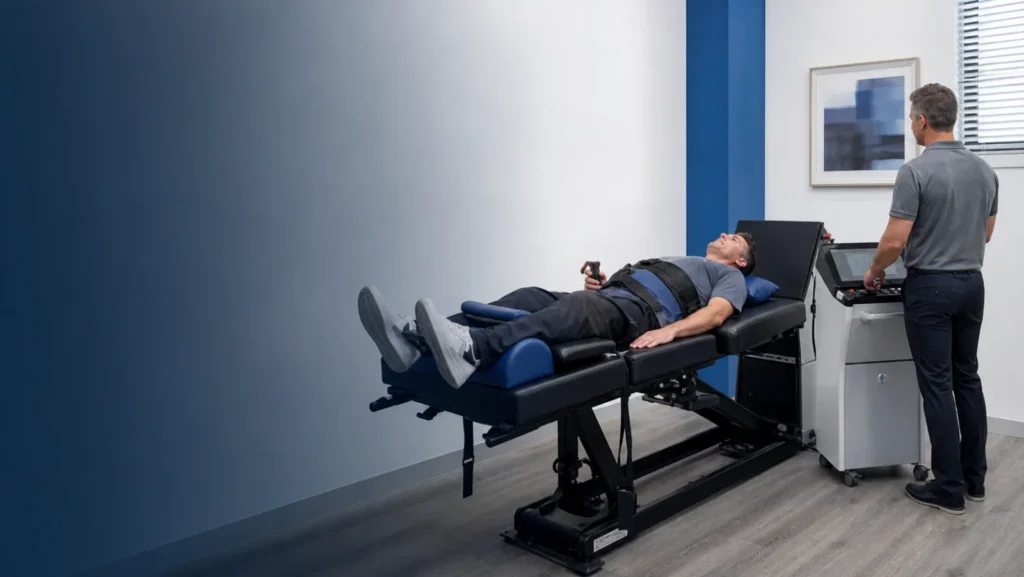
Chiropractic care helps many people move better, feel better, and get back to the parts of life they have been missing. But the spine is not a one-tool system. Sometimes a patient makes progress, then reaches a point where the symptoms stop changing. That is when a good care plan should get more specific.
A plateau does not erase the progress already made. It gives us new information. If disc irritation or nerve pressure appears to be part of the problem, non-surgical spinal decompression may be worth considering as an added layer of care.
Chiropractic care is still the foundation
Chiropractic adjustments can improve joint motion, reduce mechanical stress, and help the spine and nervous system function better. They also give us a chance to see how the body responds over time instead of making decisions from one painful day.
At Life Charge, we use the history, examination, digital X-rays, thermographic findings, and response to care to build a clearer picture. When a patient is improving, we stay the course. When progress slows, we reassess. The goal is not to force every case into the same plan.
How decompression is different from ordinary traction
Traction is a broad term for using a pulling force to unload part of the spine. It may be applied manually or with a machine. Some traction uses a steady pull; other methods alternate between tension and release.
Non-surgical spinal decompression is a form of motorized traction, but the experience can be more structured. The table, patient position, force pattern, treatment angle, and progression are selected as part of a specific protocol. The patient’s response is monitored across a planned course of care.
| Feature | General traction | Non-surgical spinal decompression |
|---|---|---|
| Basic idea | Uses manual or mechanical pulling force to unload the spine. | Uses motorized traction through a structured treatment cycle. |
| Force pattern | May be static, intermittent, manual, or machine-driven. | Commonly cycles tension and relaxation according to a set protocol. |
| Targeting | Depends on position, clinician technique, and equipment. | Position, force, angle, and progression may be selected for a particular spinal region and presentation. |
| Follow-up | Varies from a brief trial to a course of care. | Usually includes repeated symptom and functional reassessment. |
| Evidence | Results vary by diagnosis, method, and patient selection. | Some studies report benefit, but research does not prove it is always better than conventional traction. |
The honest distinction matters. Decompression should not be sold as a completely unrelated treatment or a guaranteed answer. The value is in careful screening, appropriate equipment, a specific protocol, and knowing when the patient’s condition calls for another option.
When we start thinking about another layer
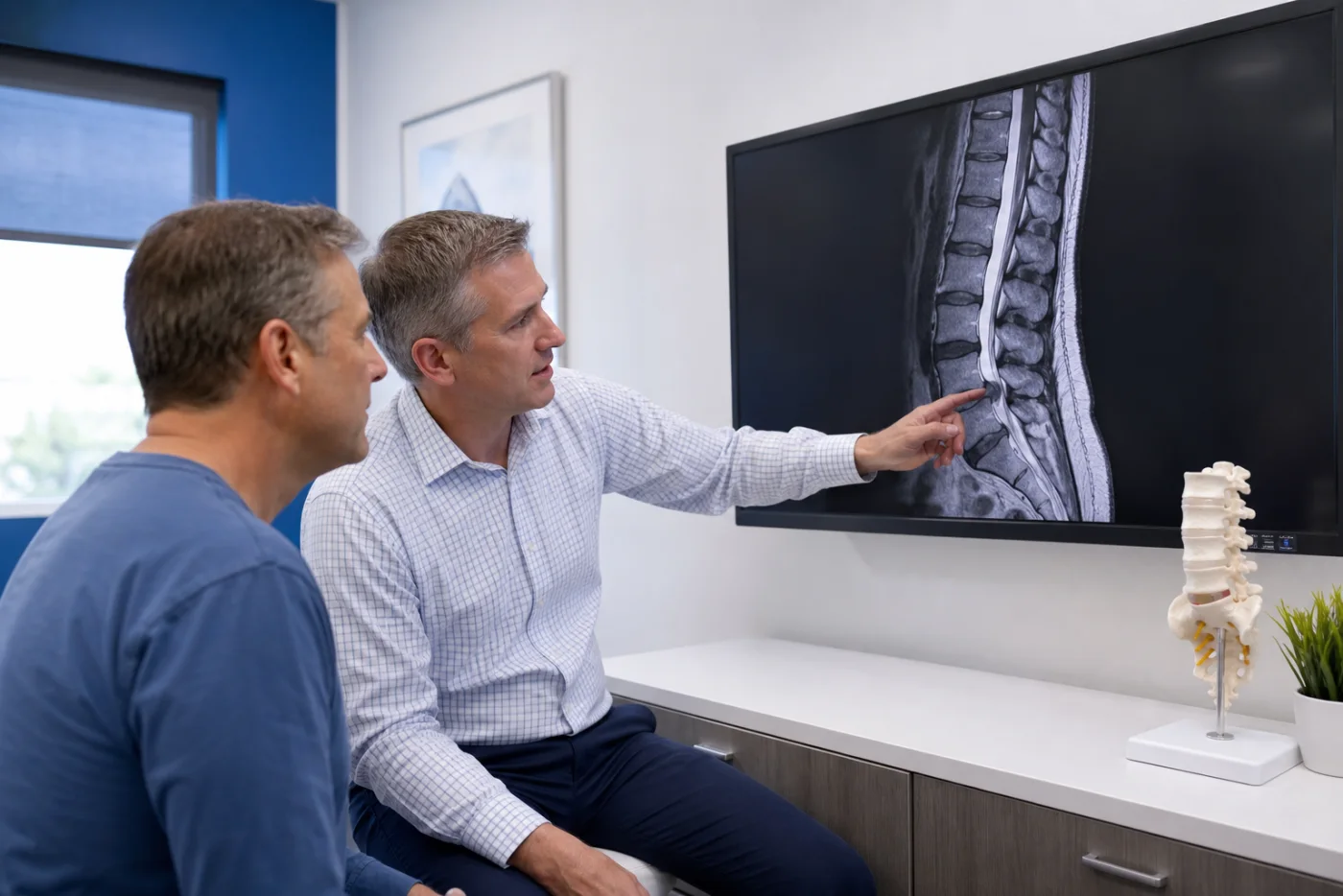
A decompression evaluation may make sense when a patient has persistent neck or low-back symptoms and the findings suggest a disc-related or nerve-related component. Examples include:
- A diagnosed or suspected disc bulge or herniation
- Sciatica or pain that travels into an arm or leg
- Degenerative disc changes with recurring symptoms
- Progress that has leveled off despite appropriate chiropractic care
These findings do not automatically make someone a candidate. Imaging can show disc changes in people who have no pain at all. The exam still has to match the symptoms, and the safety screening matters.
Where avoiding surgery fits into the conversation
Many people want to explore every reasonable conservative option before surgery. That is understandable. For a properly screened patient without urgent neurologic warning signs, decompression may offer another non-surgical step before an invasive procedure is considered.
The goal is not to promise that surgery can always be avoided. It is to make sure the patient has a thoughtful plan, measurable goals, and a clear point at which the plan will be changed if it is not helping. Surgery can be the right decision when there is severe or progressive neurologic loss, spinal instability, infection, tumor, fracture, or disabling symptoms that have not responded to suitable conservative care.
A connected next step, not starting over
When a Life Charge patient needs a more specialized disc evaluation, the goal is continuity. We want the next clinician to understand what has already been tried, what changed, what did not, and what the examination or imaging suggests.
That is why the question is not “chiropractic or decompression?” Chiropractic may remain part of the bigger plan. Decompression can be an additional tool for the right patient, while medical or surgical co-management remains available when the findings call for it.
Considering the next conservative step?
If your progress has leveled off and you want to know whether non-surgical spinal decompression is appropriate, the Gallatin Disc Center can review your case and explain the options. A consultation does not guarantee candidacy, and surgery should not be delayed when it is medically necessary.
Sources and evidence notes
- Vanti C, et al. The effects of adding mechanical traction to physical therapy for low back pain: systematic review and meta-analysis. Acta Biomed. 2023.
- Koçak FA, et al. Traditional motorized traction and non-surgical spinal decompression added to conventional physiotherapy for chronic low back pain. Cureus. 2024.
- Macario A, et al. Systematic literature review of motorized spinal decompression for chronic discogenic low back pain. The evidence available at the time was not sufficient to establish efficacy conclusively.
- North American Spine Society. Evidence-based clinical guideline for lumbar disc herniation with radiculopathy.
Schedule First Visit