Back-to-School Backpack Safety: A Chiropractor’s Guide for Parents
As students head back to school, backpacks quickly fill with textbooks, laptops, water bottles, sports gear, and everything else needed for the day. A backpack may seem harmless, but when it is too heavy or worn incorrectly, it can contribute to neck, shoulder, and back discomfort.
The good news is that a few simple adjustments can make carrying a backpack safer and more comfortable.
How heavy should a child’s backpack be?
A commonly used guideline is to keep a loaded backpack around 10% of the child’s body weight. Some children may comfortably tolerate slightly more, but a child’s size, strength, age, and walking distance all matter.
More important than the exact number is how your child looks and feels while carrying it. Warning signs that the backpack may be too heavy include:
- Leaning forward while walking
- Struggling to put the backpack on or take it off
- Shoulder, neck, or back pain
- Tingling or numbness in the arms or hands
- Red marks where the straps rest
- Frequently shifting the backpack to get comfortable
Pain should not be considered a normal part of carrying school supplies.
Choose the right backpack
Look for a backpack that fits your child’s torso rather than buying one they will “grow into.” An oversized backpack can hang too low and pull the body backward.
Helpful features include:
- Two wide, padded shoulder straps
- A padded back panel
- Multiple compartments to distribute weight
- A chest or waist strap for heavier loads
- Lightweight but durable material
Rolling backpacks can be useful when permitted by the school, although they may be awkward on stairs or in crowded hallways.
Use both shoulder straps
Wearing a backpack over one shoulder shifts the load to one side. Over time, this can cause the child to lean or rotate to compensate.
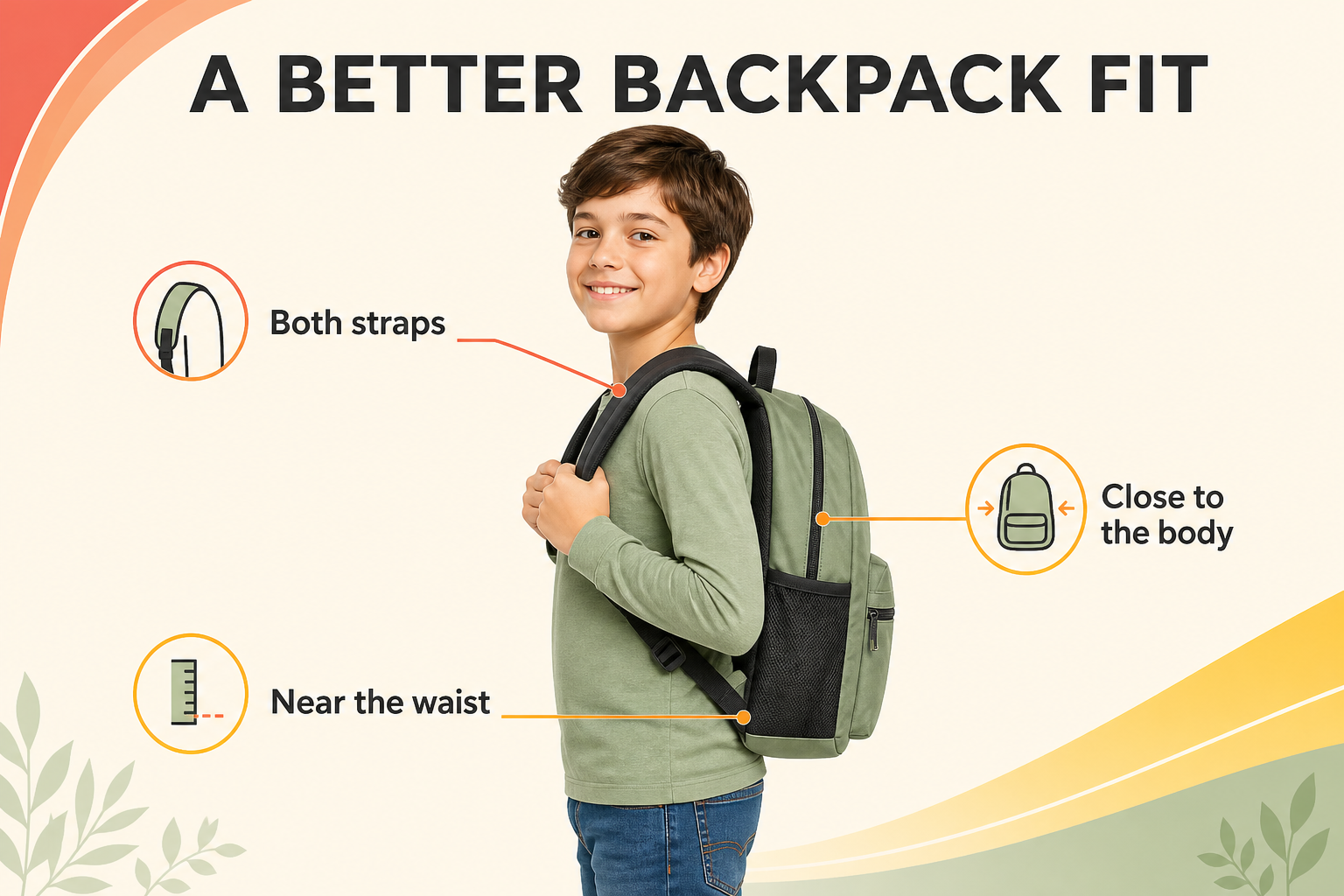
Both straps should be used and adjusted so the backpack sits close to the body. The bottom should rest near the waist rather than hanging toward the hips or thighs. Straps should feel secure without digging into the shoulders.
Pack heavier items close to the back
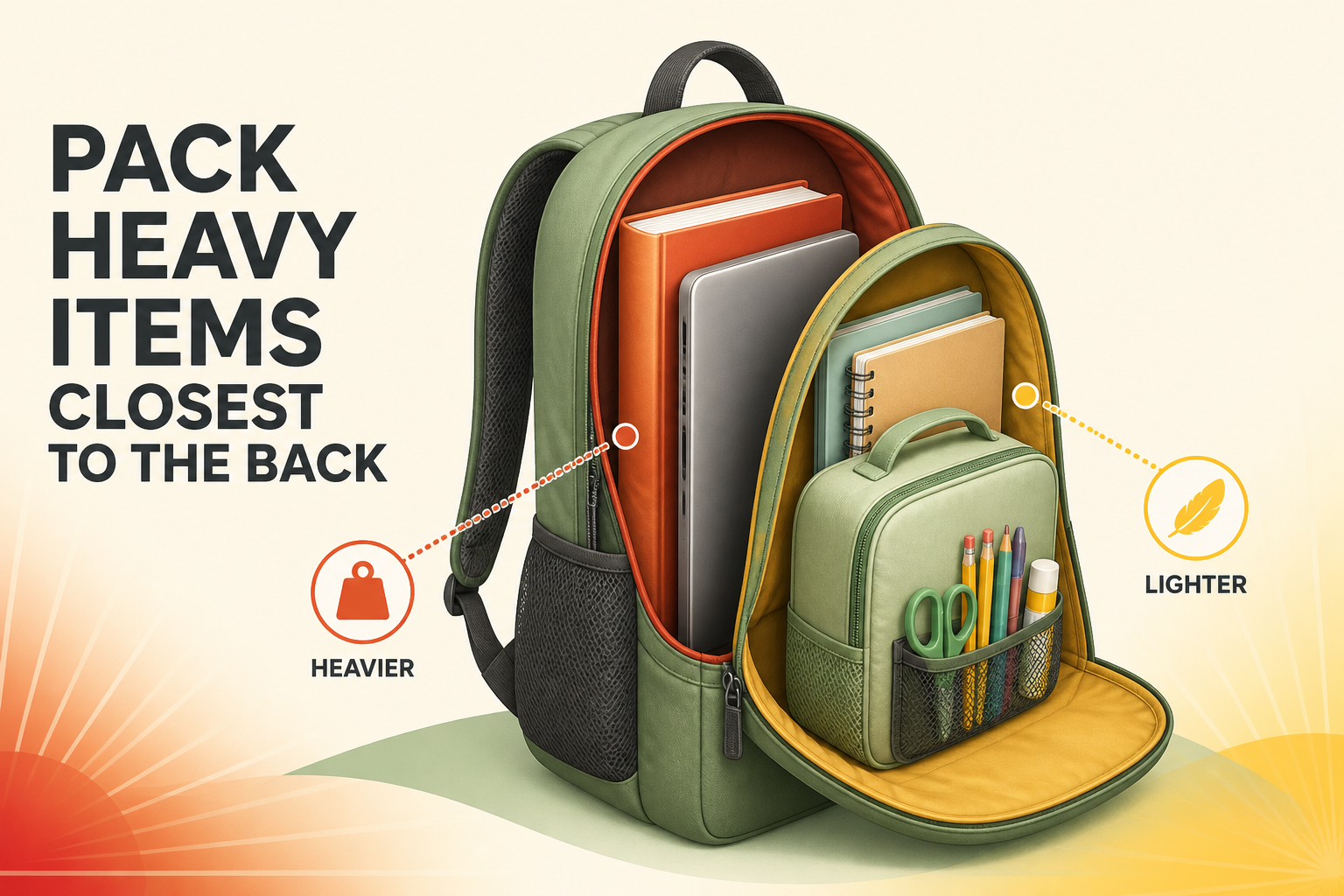
Place textbooks, laptops, and other heavy items in the compartment closest to your child’s back. Lighter supplies can go toward the outside.
Encourage your child to clean out the backpack regularly. Old papers, unnecessary books, extra clothing, and forgotten water bottles can add more weight than expected. If a textbook is not needed that evening, it may be better left at school when possible.
Lift the backpack safely
Teach your child to place the backpack on a desk, table, or chair before sliding both arms through the straps. If they lift it from the floor, they should bend their knees, keep the backpack close, and avoid twisting while standing up.
This is especially important when the backpack is heavily loaded.
Pay attention to discomfort
Occasional muscle fatigue after an unusually long day may happen. Repeated pain, headaches, numbness, weakness, or discomfort that changes how a child walks or participates in activities deserves attention.
A healthcare professional can help determine whether the symptoms are related to the backpack, sports, an injury, posture, or another issue. Sudden severe pain, weakness, loss of coordination, or symptoms following a significant injury should be medically evaluated promptly.
A quick backpack check for parents
- Is the backpack appropriate for my child’s size?
- Is it reasonably light when fully packed?
- Are both shoulder straps being used?
- Does the bag sit close to the body and near the waist?
- Can my child walk normally without leaning or struggling?
A two-minute check can prevent a small backpack problem from becoming an everyday source of discomfort.
Backpack and posture support in Gallatin, TN
If your child regularly complains of neck, shoulder, or back discomfort, the team at Life Charge Chiropractic can evaluate how they move and discuss whether chiropractic care may be appropriate. We serve families throughout Gallatin, Hendersonville, and the surrounding communities.
Schedule your new-patient appointment or call (615) 219-9912 to learn more.
Schedule First Visit